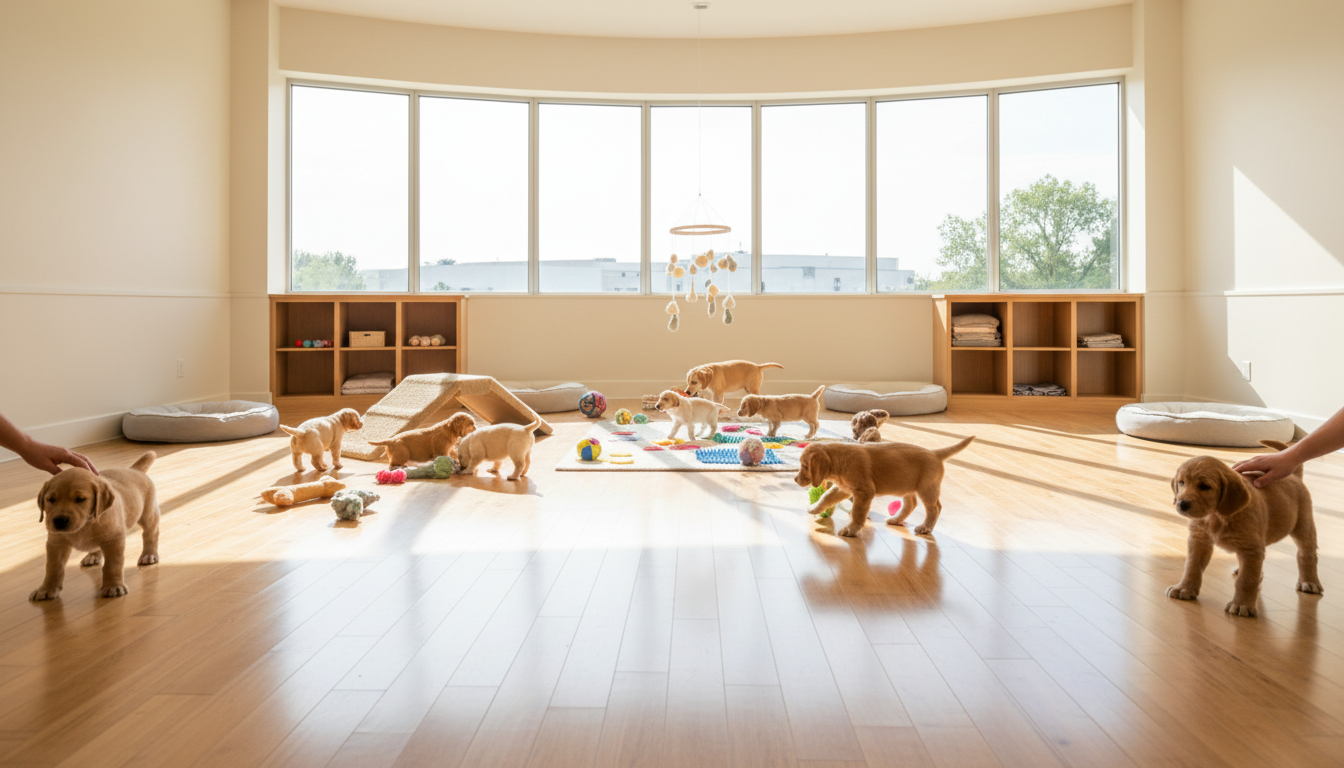
The critical socialisation window for puppies occurs between 4 and 16 weeks of age, with the most vital developmental phase typically ending around the 12 week mark. During this timeframe, owners should introduce their pets to various environments, people, and other animals to foster confident and well adjusted adult behavior. Ensuring positive experiences before this window closes helps prevent long term anxiety and fear based reactions later in life.
Bringing home a new puppy is a joyful experience; however, it often comes with a sudden realization that the clock is ticking on their social development. Many Australian owners feel paralyzed by the conflicting advice regarding vaccinations and public exposure. You might worry that keeping your puppy safe at home will lead to lifelong anxiety; conversely, you fear that venturing out too soon risks their health. This narrow biological window between 3 and 16 weeks is the most influential phase of your dog's life. In this guide, we will navigate the delicate balance of the socialisation timeline and the 7 7 7 rule. You will learn how to handle fear periods and manage safety concerns. We will provide a practical checklist to ensure your puppy grows into a confident, well-adjusted companion.
What Exactly Is the Critical Socialisation Window for Puppies
The critical socialisation window for puppies is a fleeting but vital developmental phase where their brains are uniquely primed to process and accept new information. During this stage, a puppy's brain acts like a sponge; they absorb every sight, sound, and interaction without the deep-seated fear responses that naturally develop as they mature. This biological openness allows them to categorise new experiences as safe or normal with relatively little effort.
While organizations like the RSPCA often highlight the window between 4 and 16 weeks, research indicates that this receptive period actually begins as early as 3 weeks of age. This means the primary foundation of a dog's temperament is laid at the breeder's home before you even bring your new companion home. By the time a puppy joins your household, typically at 8 weeks, they have already navigated a significant portion of this window.
It is essential to distinguish between two different types of learning that occur during this time:
Habituation: This is the process of getting a puppy used to "background" stimuli. It involves repetitive exposure to things like the sound of a vacuum cleaner, the sight of a passing car, or the noise of a lawnmower until the puppy no longer reacts to them.
Socialisation: This is active learning. It involves teaching the puppy how to interact appropriately with living beings, including other dogs, children, and strangers, ensuring these encounters are paired with positive reinforcement.
Because curiosity outweighs fear during these weeks, the effort you put in now acts as a long-term insurance policy against future reactivity and anxiety.
The Biological Timeline: Why 3 to 16 Weeks Matters
To leverage this insurance policy, you must understand how the critical socialisation window for puppies is divided into distinct biological sub-phases. Each stage serves a specific purpose in shaping your puppy’s future temperament.
From 3 to 8 weeks, the puppy is in the Breeder Phase. This is where they learn essential dog-to-dog communication. By interacting with their mother and littermates, they develop an understanding of canine body language and bite inhibition. The Australian Veterinary Association (AVA) advises that puppies remain with their litter until at least 8 weeks of age specifically to ensure this social foundation is properly established. A puppy removed too early from this environment often misses out on these foundational lessons in canine etiquette.
Once you bring your puppy home, usually between 8 and 12 weeks, they enter the Human Phase. This is a profound window for bonding. During these weeks, your puppy is uniquely predisposed to form strong attachments to humans and accept the specific routines of your household. It is the prime time for positive reinforcement and gentle exposure to the people and environments they will inhabit for the rest of their lives. During this time, your puppy is naturally more brave than they will be in just a few months.
Between 12 and 16 weeks, the Expansion Phase occurs. This is the period of generalisation. A puppy who has met several friendly strangers during the Human Phase will now begin to understand that all humans, regardless of what they are wearing or how they move, are generally safe. This phase is about reinforcing previously learned lessons in more varied and complex environments.
As the puppy reaches the 16-week mark, a biological threshold is crossed. Their innate curiosity response, which encourages them to investigate new things, begins to be outweighed by a natural fear response. This shift is an evolutionary survival mechanism; it ensures that a maturing animal remains wary of unfamiliar and potentially dangerous stimuli. Consequently, any object or situation not encountered before this point becomes much more difficult for the puppy to process as safe or neutral.
Navigating Puppy Fear Periods during Socialisation
While the biological trajectory of the critical socialisation window for puppies is generally defined by curiosity, it is rarely a linear path of increasing bravery. Most puppies experience a distinct fear period between 8 and 11 weeks of age. This developmental dip in confidence often coincides exactly with when a puppy arrives at their new home, making it a sensitive time for transitions. You might notice your puppy suddenly acting spooky or hesitant around objects that were previously ignored, such as a garden gnome, a rustling rubbish bag, or a bicycle.
During these weeks, avoid the temptation to force an interaction to prove to the puppy that an object is safe. Forced exposure can result in one-trial learning, where a single negative or terrifying experience leaves a lifelong psychological scar. Instead, allow your puppy to retreat and observe from a distance. Pair the sight of the scary stimulus with high-value rewards to create a positive association without overstepping their comfort zone.
This early stage is actually your best insurance policy against the second, more intense fear period that typically occurs between 6 and 14 months. While adolescent dogs may suddenly react to familiar sights with renewed suspicion, those who have a solid foundation of positive experiences from their primary socialisation window possess the resilience to bounce back much faster.
The Australian Vaccination Dilemma: Socialisation versus Safety
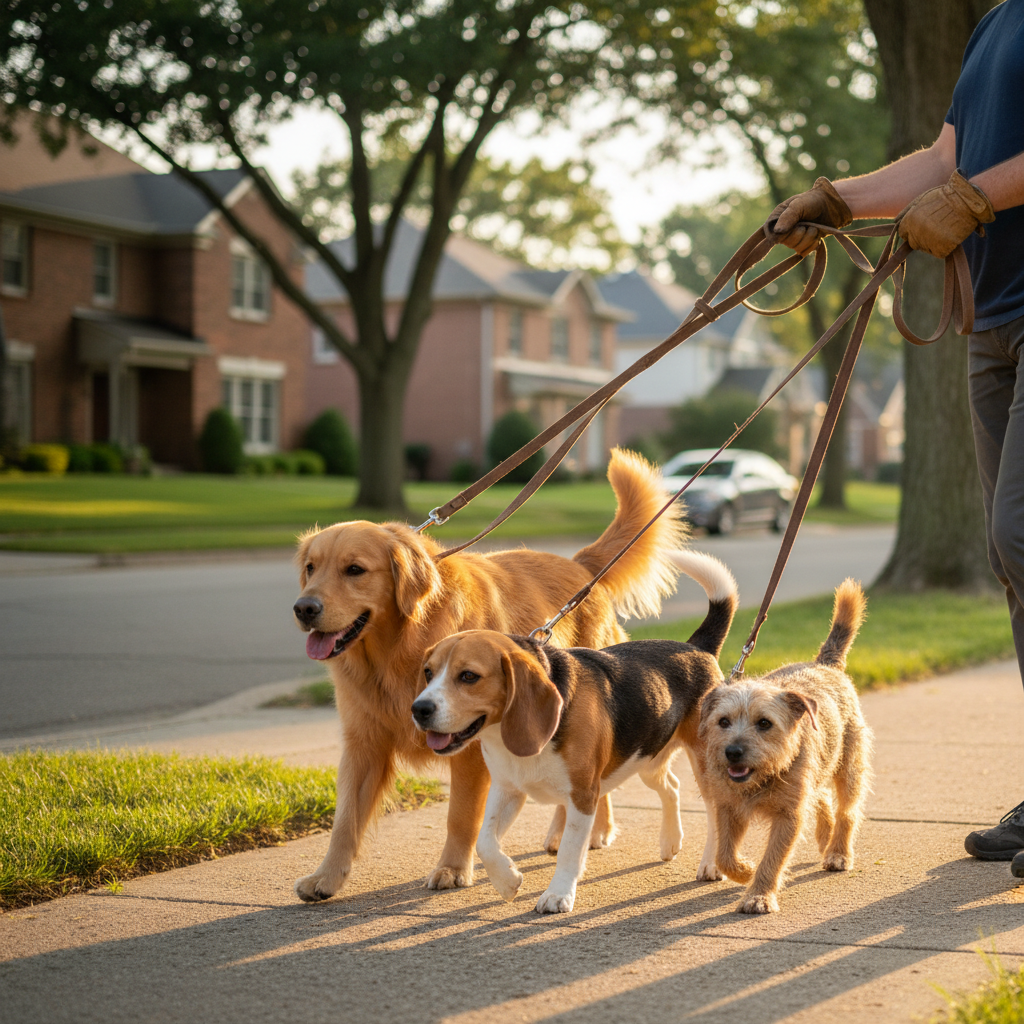
Managing a puppy’s emotional development often feels like a race against their medical schedule. In Australia, a common point of confusion for new owners is whether to wait until after the second vaccination, or even the final 16 week booster, before leaving the house. This creates a genuine dilemma; following strict veterinary advice to stay home protects against diseases like Canine Parvovirus, yet ignoring the critical socialisation window for puppies significantly increases the risk of lifelong anxiety and reactivity.
The key to balancing these risks lies in the concept of controlled exposure. You do not need to choose between physical health and mental stability. Instead of waiting for full immunity to walk your puppy on the pavement, focus on experiences where their feet never touch the ground in high-risk areas. This means using a puppy carrier, a mesh bag, or even sitting in the back of your car with the boot open at a local shopping centre or a quiet park.
In the Australian context, certain environments are strictly off-limits during this phase. Public dog parks, communal nature strips in high-density suburbs, and popular off-leash beaches are high-risk zones for parvovirus and other contaminants. However, you can safely invite vaccinated, friendly adult dogs to your own backyard or visit a friend’s secure garden. By prioritising sight and sound socialisation from a safe distance, you ensure your puppy observes the world without being exposed to environmental pathogens. This proactive approach allows you to respect the developmental peak that occurs before 12 weeks while still following a sensible biosecurity plan.
How to Use the 7 7 7 Rule for Puppy Socialisation
Building on the concept of controlled exposure, the 7 7 7 rule provides a structured framework to ensure your puppy experiences a diverse range of stimuli while their brain is still in its most receptive state. This rule suggests that by the time a puppy is seven weeks old, or within their first ten days in your home, they should have encountered seven variations of different experiences. This helps prevent novelty gaps where a puppy grows up to be fearful of specific, everyday occurrences because they were never introduced during the critical socialisation window for puppies.
To apply this in an Australian domestic setting, focus on these three core categories using items found in your own backyard or house:
Category | Australian Backyard and Home Examples |
|---|---|
7 Surfaces | Buffalo grass, sandstone pavers, loose gravel, timber decking, ceramic tiles, wool carpet, and a crinkly plastic tarp. |
7 People | A child, a man with a beard, someone in high-vis workwear, a person in a broad-brimmed sun hat, someone using an umbrella, a person with a walking frame, and a stranger wearing sunglasses. |
7 Objects | A rolling wheelie bin, an open cardboard box, a fluttery laundry line, a vacuum cleaner, a bicycle, a soft plush toy, and a rubber chew toy. |
Always prioritise quality over quantity. If your puppy shows hesitation, increase the distance from the object and use high-value rewards to ensure the 7 experiences are all positively reinforced. This method ensures that the puppy learns to generalise new sensations as safe, rather than startling.
Is 14 Weeks Too Late to Socialise a Puppy
At 14 weeks, you are approaching the end of the primary developmental phase, but it is certainly not too late to make significant progress. While the critical socialisation window for puppies begins to narrow around 16 weeks, you are simply shifting your focus from proactive socialisation to remedial training or desensitisation. At this age, the puppy’s brain is no longer a blank slate; they have already begun to form opinions about what is safe and what is suspicious.
Instead of the rapid, sponge-like learning seen at eight weeks, progress now requires a more measured and systematic approach. This is where structured online programs become particularly valuable. Unlike a chaotic in-person puppy class that can overwhelm a late bloomer and trigger a lasting fear response, online learning allows you to control every variable. You can work at your puppy’s specific threshold within the safety of your home, ensuring that every new exposure remains positive. With patience and high-value reinforcement, you can still build the confidence necessary for a well-adjusted adult dog.
Socialisation Checklist: Everyday Sights and Sounds
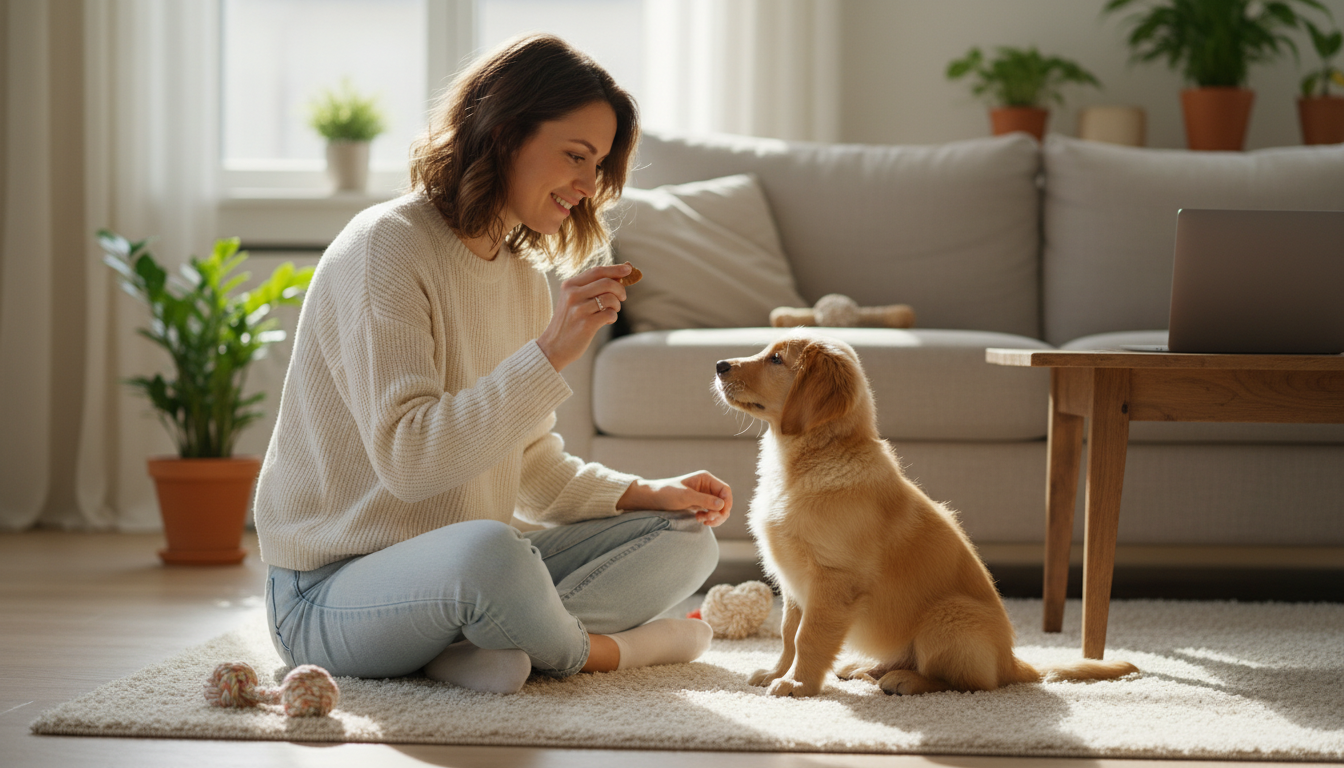
To make the most of the remaining time in the critical socialisation window for puppies, you should integrate micro-exposures into your daily routine. Socialisation is less about a sheer volume of experiences and more about the quality of every interaction. Each new sight or sound must be paired with high-value treats and calm praise to ensure your puppy forms a positive association rather than a neutral or negative one.
Focus on common Australian environmental triggers that your dog will encounter throughout their life. These specific stimuli are often overlooked but can cause reactivity if not introduced early:
Auditory Stimuli: The warble of a magpie, the high-pitched rumble of a wheelie bin being dragged across the pavement, and the sudden hiss of air brakes from a passing bus.
Visual Stimuli: Neighbours wearing high-vis workwear, individuals in wide-brimmed sun hats, and children on scooters or skateboards.
Tactile and Domestic: The vibration of a handheld vacuum, the rustle of a plastic rain poncho, and the feel of wet grass under their paws.
Aim for calm observation. If your puppy looks at a trigger and then back at you, reward that choice immediately. By prioritising these intentional, positive moments, you build a resilient dog who views the Australian environment with curiosity rather than caution.