Yes, you should use treats in puppy training because they provide immediate positive reinforcement and help your dog learn new commands more quickly. While food is an excellent motivator, you should limit treats to ten percent of their daily diet and eventually fade them out using a variable reward schedule to avoid food dependency; this ensures your puppy listens even when snacks are not present.
It is a common frustration for many new owners; your puppy sits perfectly when you have a piece of chicken in your hand, but they completely ignore you the moment your pockets are empty. This reliance on food often feels more like a bribe than actual training, leading many to wonder if they should be using treats at all. Understanding how to use food correctly is the difference between a dog that only listens for snacks and one that respects your guidance in any environment. In this guide, we will explore the practical benefits of food rewards and clarify the crucial distinction between luring and bribing. You will learn how to select high quality treats available in Australia and discover the 'Slot Machine Method' to phase out food while maintaining reliable behavior, even if your puppy does not seem particularly food motivated.
Should I use treats for puppy training? The short answer
Yes. If you are asking should I use treats in puppy training, the answer from professional trainers is a resounding yes. Using food is one of the most effective ways to communicate with your puppy, build a lasting bond, and accelerate their learning. While some owners worry that they are merely bribing their dog, this is a common misunderstanding of how positive reinforcement actually functions.
When used correctly, treats serve as a primary reinforcer. This means they satisfy a basic biological need, making them a powerful motivator for a young animal still learning the rules of your home. Rather than a bribe, a treat is a form of payment for a job well done. It creates a positive association with you and the training process, turning work into a game they want to win.
The key is moving from luring to rewarding at the right time. Our comprehensive online puppy course teaches you exactly how to implement these techniques without becoming dependent on food forever. When you use high-quality treats properly, you are not just getting a sit or a stay; you are teaching your puppy that listening to you is the most rewarding choice they can make. If you have specific questions about your puppy's diet or motivation, you can always contact our training team for expert guidance.
The benefits of using treats in your training routine
The effectiveness of food stems from its status as a primary reinforcer. This means your puppy is biologically wired to value it from birth. Unlike secondary reinforcers, such as a verbal "good boy" or a pat on the head, food does not need to be learned as a reward. For a young puppy with a short attention span, the immediate gratification of a treat provides a clear, undeniable signal that they have performed the correct action. In the early stages of development, this biological drive is far more potent than social praise.
Incorporating treats into your routine significantly reduces resistance during the learning phase. When a puppy views training as a series of opportunities to earn something delicious, the psychological barrier to cooperation drops. They are no longer simply complying with an order; they are participating in an enjoyable activity. This shift from a chore to a game is vital for long-term engagement, making the puppy an active participant in their own education rather than a passive recipient of instructions.
Beyond just eliciting a specific physical behavior, treats leverage the science of positive association. Every time you deliver a reward, your puppy’s brain releases dopamine, creating a powerful link between the command, the action, and you. You are not just teaching a "sit"; you are conditioning your puppy to feel a surge of positive emotion whenever they interact with you. This emotional connection is the foundation of a reliable recall and a calm, confident temperament.
If you are still weighing up the question, "should I use treats in puppy training?" consider the efficiency of the method. Food allows for high-frequency repetitions, which are necessary for developing muscle memory. Because small treats are consumed quickly, you can mark and reward dozens of correct movements in a single ten-minute session. Our comprehensive online puppy course breaks down these sessions into manageable steps to ensure your puppy stays motivated. If you find your puppy is losing interest despite using high-value rewards, you can always contact our training team for expert troubleshooting.
Lure vs Reward vs Bribe: Why your puppy only listens when you have food
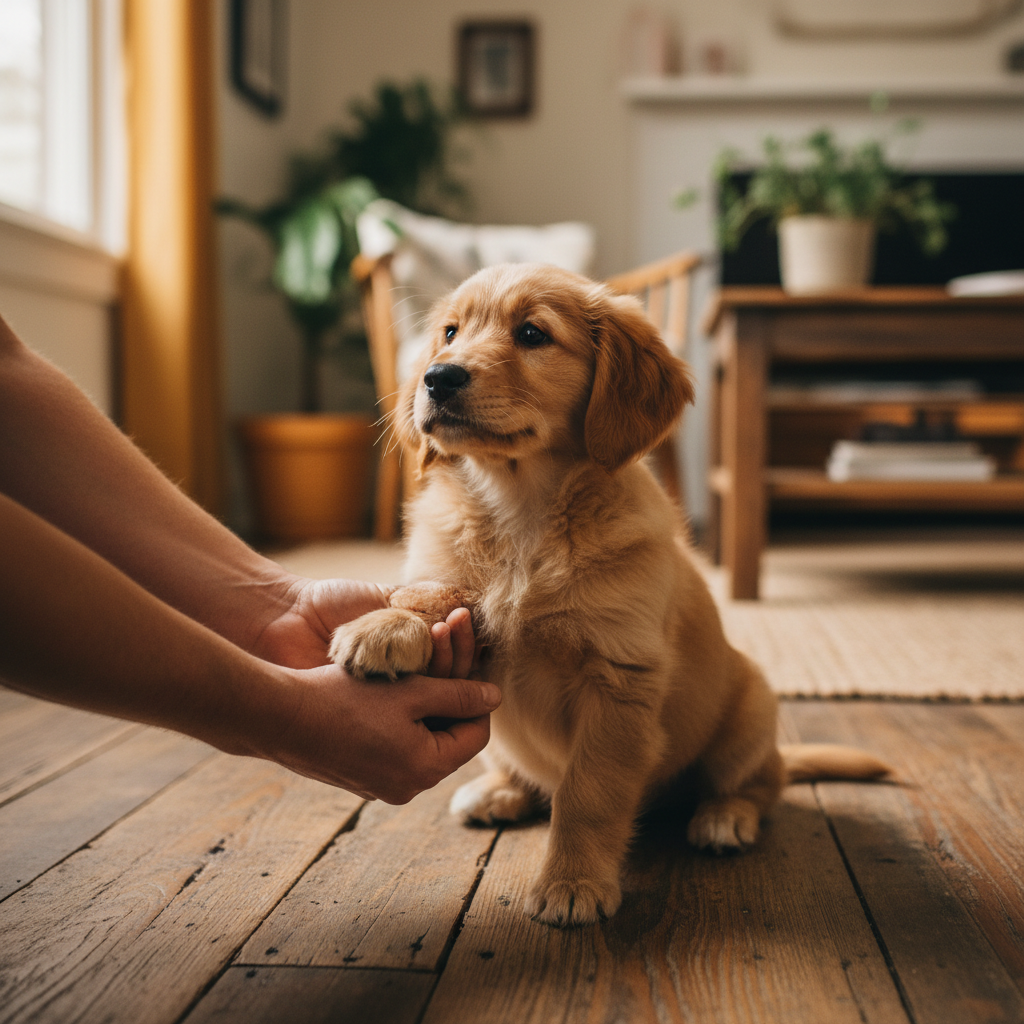
Many owners find themselves in a frustrating loop where their puppy only complies when they see a hand move toward a treat pouch. This often leads people to wonder, should I use treats in puppy training if my dog won't listen without them? The issue usually is not the food itself, but a misunderstanding of how and when the food is presented. To build a reliable response, you must distinguish between luring, rewarding, and bribing.
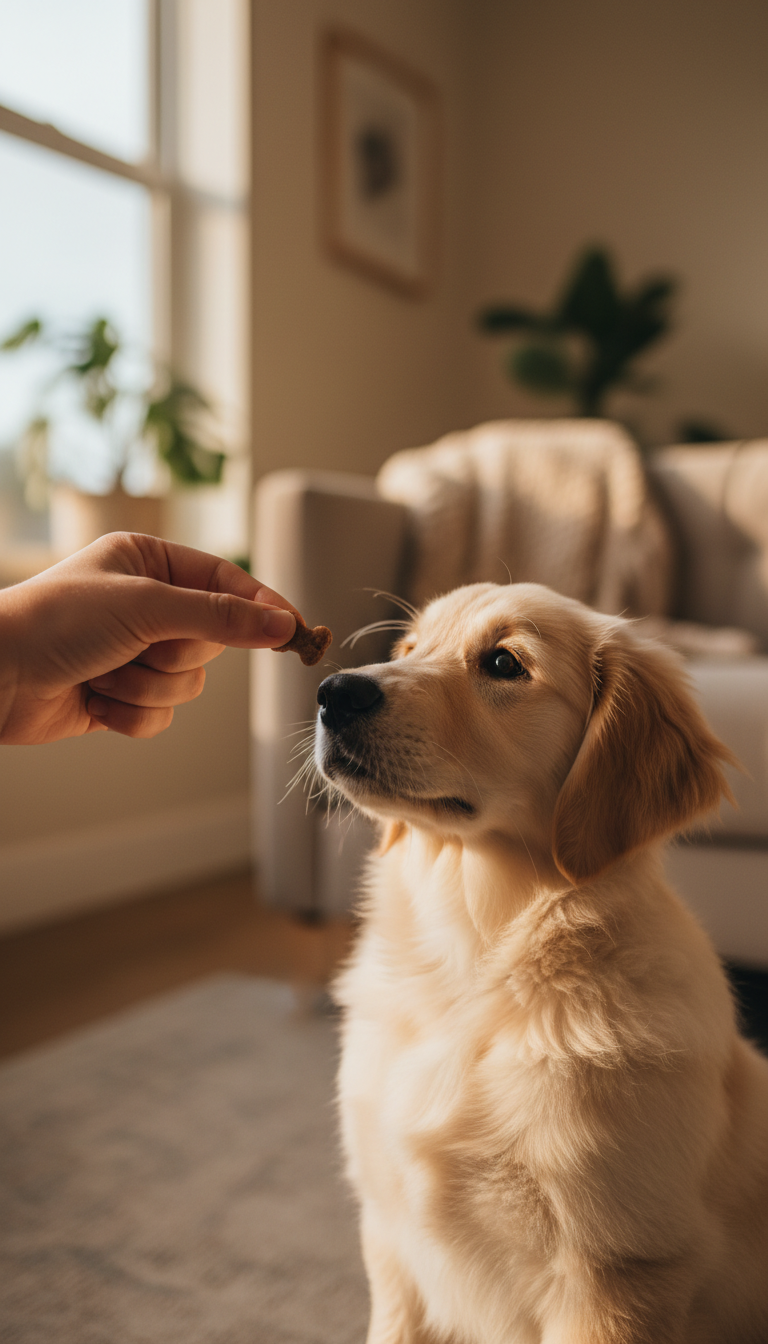
Luring is a teaching tool used for the initial learning phase of a new skill. You hold a treat to your puppy’s nose and move it to guide them into a position, such as lifting it up and back to encourage a sit. Think of the treat as a magnet or a steering wheel. It is essential for the first few repetitions to help the puppy understand the physical movement required, but it must be phased out quickly to avoid dependency.
Rewarding is the gold standard for a well-trained dog. In this scenario, the treat is hidden in a pouch, pocket, or placed on a nearby counter. You give the command, the puppy performs the action, and only then do you reach for the food. The treat is a surprise payment for a job well done. Because the puppy cannot see the food beforehand, they learn to listen to your voice or hand signal rather than just following a piece of meat.
Bribing is a common mistake that creates a dog who only listens when they feel like it. This happens when you give a command, the puppy ignores you, and you then produce a treat to convince them to listen. For example, if you say "Sit," your puppy continues to sniff the grass, and you then reach into your bag to show them a piece of chicken to get the behavior, you are bribing. You have just taught your puppy that your first command is optional and that they should wait for a better offer before complying.
Method | When the treat appears | Primary Purpose |
|---|---|---|
Luring | Before the action starts | Guiding the puppy into a new, unfamiliar position. |
Rewarding | After the action is finished | Reinforcing a behavior the puppy already understands. |
Bribing | After a command is ignored | Negotiating for compliance after a failure. |
To avoid developing a dog that requires a bribe, only use a lure for the first three to five repetitions of a new skill. Once the puppy understands the movement, switch to an empty hand signal that mimics the lure, then reward from your other hand or a pouch once the behavior is complete. Our comprehensive online puppy course provides step-by-step guidance on how to transition away from luring. If your puppy has already developed a habit of waiting for a bribe, you can contact our training team to learn how to reset your communication.
How to choose the best puppy training treats in Australia
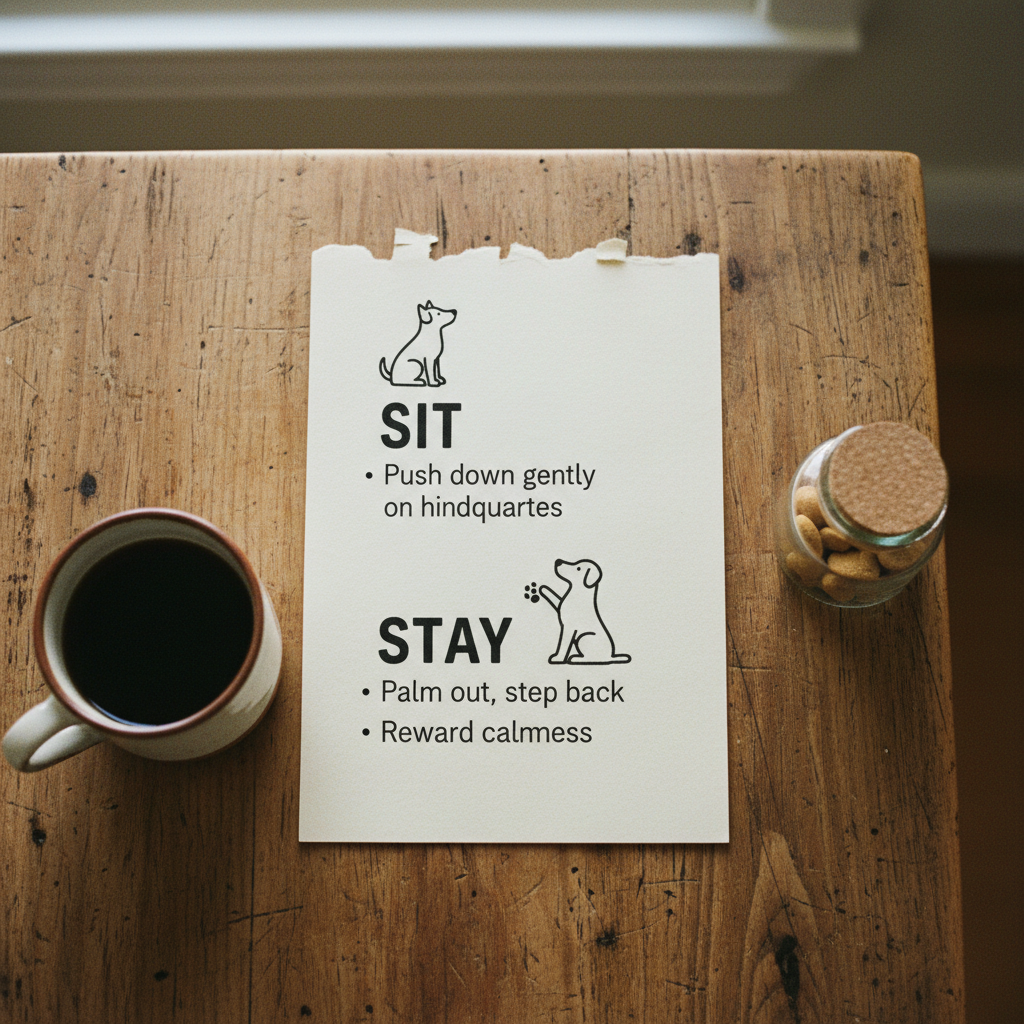
To ensure success after moving past the luring phase, the physical properties of the food you choose are just as important as your timing. When considering "should I use treats in puppy training," you must balance motivation with health by strictly following the 10% rule. Treats should never exceed 10% of your puppy’s total daily caloric intake. If you have a heavy training day, simply reduce their main meal portions to compensate and maintain a healthy weight.
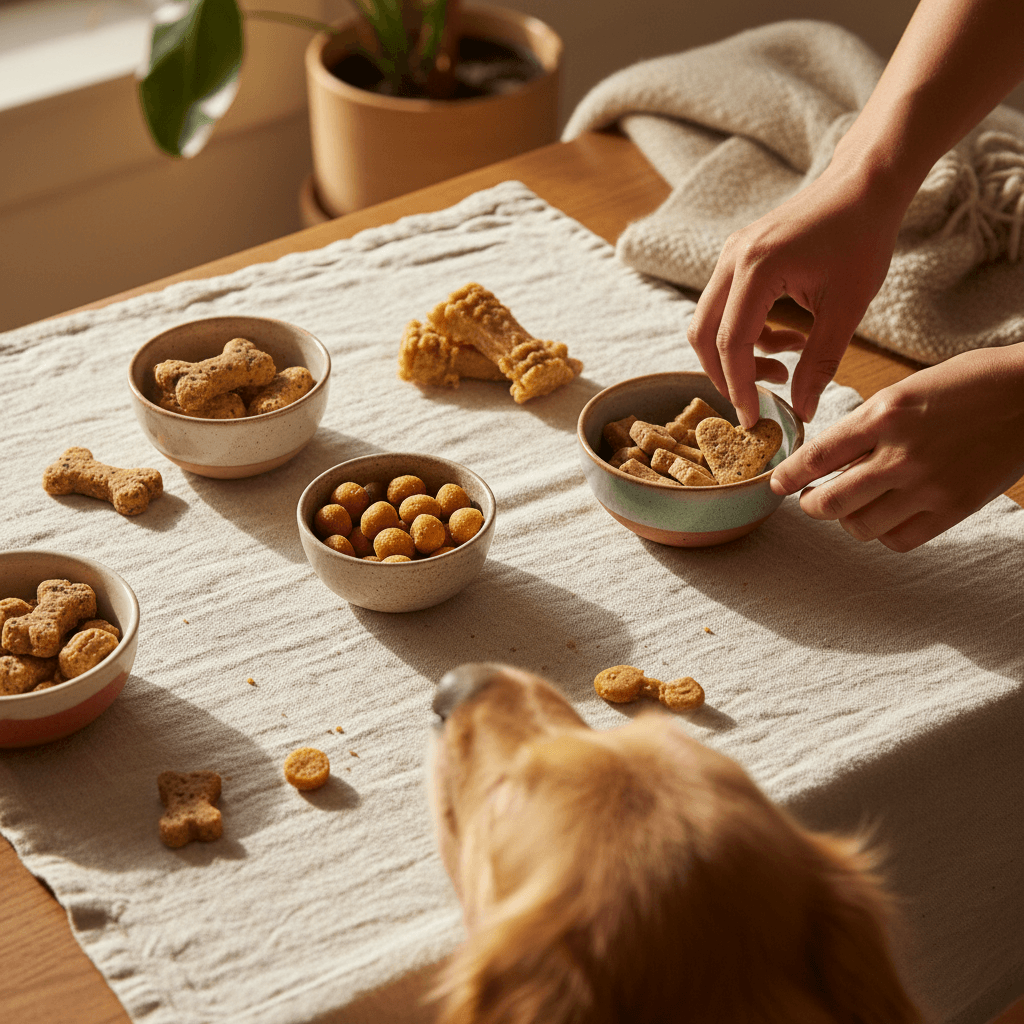
In the Australian market, we are fortunate to have access to high quality, single protein options that are far superior to generic supermarket snacks. For effective training, avoid hard, crunchy biscuits. These take too long for a puppy to chew and swallow; this break in momentum allows their mind to wander and slows down the learning process. Instead, choose "one-gulp" rewards that are soft, moist, and highly aromatic.
Brand | Recommended Product Type | Why it Works |
|---|---|---|
Prime100 | SPD (Single Protein Diet) Rolls | These can be diced into tiny, pea-sized cubes that stay moist. |
Freeze Dry Australia | Freeze-dried meats (e.g., Kangaroo or Sardines) | Intense smell and nutrient-dense; perfect for high-distraction environments. |
DoggieBalm | Soft training bites | Easy to break into even smaller pieces for high-repetition work. |
Always check ingredient labels for common fillers and allergens like grains or soy if your puppy has a sensitive stomach. Many Australian puppies thrive on grain-free, limited-ingredient rewards to avoid digestive upset during longer training blocks. If you are unsure which protein source is most appropriate for your puppy’s age and breed, our comprehensive online puppy course provides deeper nutritional insights. For puppies with specific dietary restrictions that make finding rewards a challenge, feel free to contact our training team for expert recommendations.
How to phase out treats using the Slot Machine Method
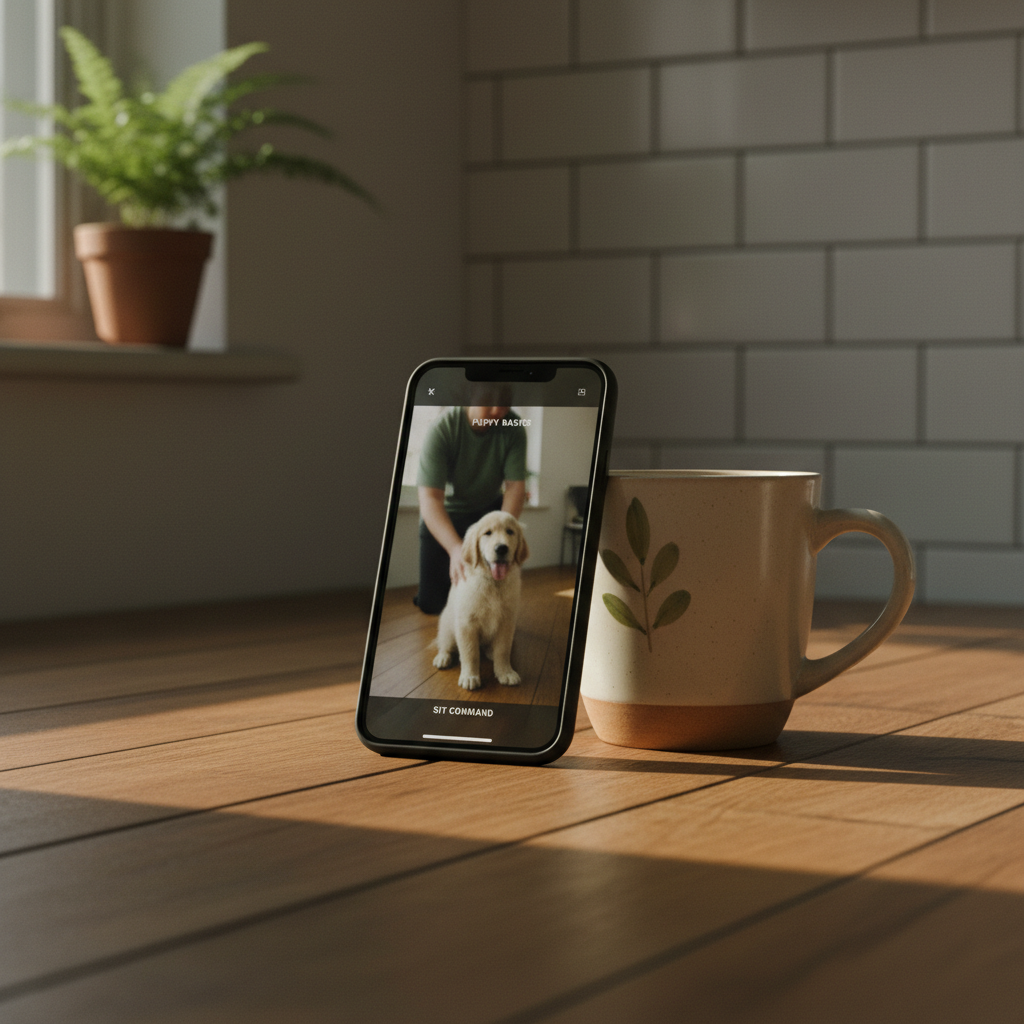
Once you have selected high quality Australian treats, the next logical question most owners ask is how to phase out treats so their dog doesn't become reliant on them. The goal is to move from continuous reinforcement, where every correct action earns a snack, to a variable intermittent schedule. This transition is what separates a dog that only works for food from a dog that is truly reliable.
To understand this, consider the slot machine analogy. If you use a vending machine and it fails to deliver your snack just once, you will likely stop putting money in immediately. This is continuous reinforcement; the behavior stops as soon as the predictable reward disappears. However, people will stand at a slot machine for hours because the payout is unpredictable. By making your puppy a gambler, you create a dog that keeps 'pulling the lever' of good behavior because they never know when the next jackpot is coming.
Phase | Reinforcement Type | Frequency | Purpose |
|---|---|---|---|
Learning | Continuous | 100% of successes | Building confidence and understanding. |
Fluency | Variable | Randomly (e.g., 1 in 3) | Increasing persistence and focus. |
Maintenance | Differential | Best efforts only | Sharpening the speed and quality of the response. |
As your puppy becomes proficient, you should practice differential reinforcement. Instead of rewarding every sit, you only reward the fastest sits or the ones where the puppy maintains eye contact. This raises the criteria for the reward and keeps the puppy engaged. Eventually, you can incorporate life rewards. These are non food motivators that your puppy naturally desires, such as having their lead clipped on for a walk, being allowed through the front door, or a quick game of tug.
Our comprehensive online puppy course provides detailed schedules for when to drop specific rewards based on your puppy's progress. If you are struggling to find the balance between rewarding and fading, you can contact our training team for a personalized assessment of your technique. Mastering this transition ensures that while you might start by asking should I use treats in puppy training, you end up with a dog that listens because they find the partnership itself rewarding.
What to do if your puppy is not food motivated
Some owners struggle when their puppy turns their nose up at food, leading them to question, should I use treats in puppy training if my dog just isn't interested? Usually, this is not a lack of motivation but a mismatch in timing or reward value. Start by scheduling training sessions immediately before mealtime. A puppy with a full stomach has little incentive to work, but one waiting for breakfast will be far more attentive.
Next, evaluate the environment versus the reward. While standard kibble might work in a quiet living room, the distractions of the local park require something significantly more enticing. You may need to swap dry biscuits for high-value items like poached chicken, small cubes of cheese, or freeze-dried liver to maintain their focus.
If food remains a challenge, consider alternative motivators. Many puppies are driven by play rather than snacks. A brief game of tug, a quick ball toss, or enthusiastic physical affection can serve as a powerful reinforcement. Our comprehensive online puppy course provides strategies for identifying your dog's unique currency. If you are still struggling to find what drives your puppy, contact our training team for expert troubleshooting.
Using treats is a wonderful way to motivate your puppy, but the true secret to long-term success lies in building a relationship based on clear communication and trust. While food rewards help jumpstart the learning process, knowing exactly when and how to phase them out is essential for a well-behaved adult dog. If you want expert help mastering these professional techniques, our Course offers a step-by-step roadmap for your training journey. Having a guided plan can make all the difference in raising a happy companion.