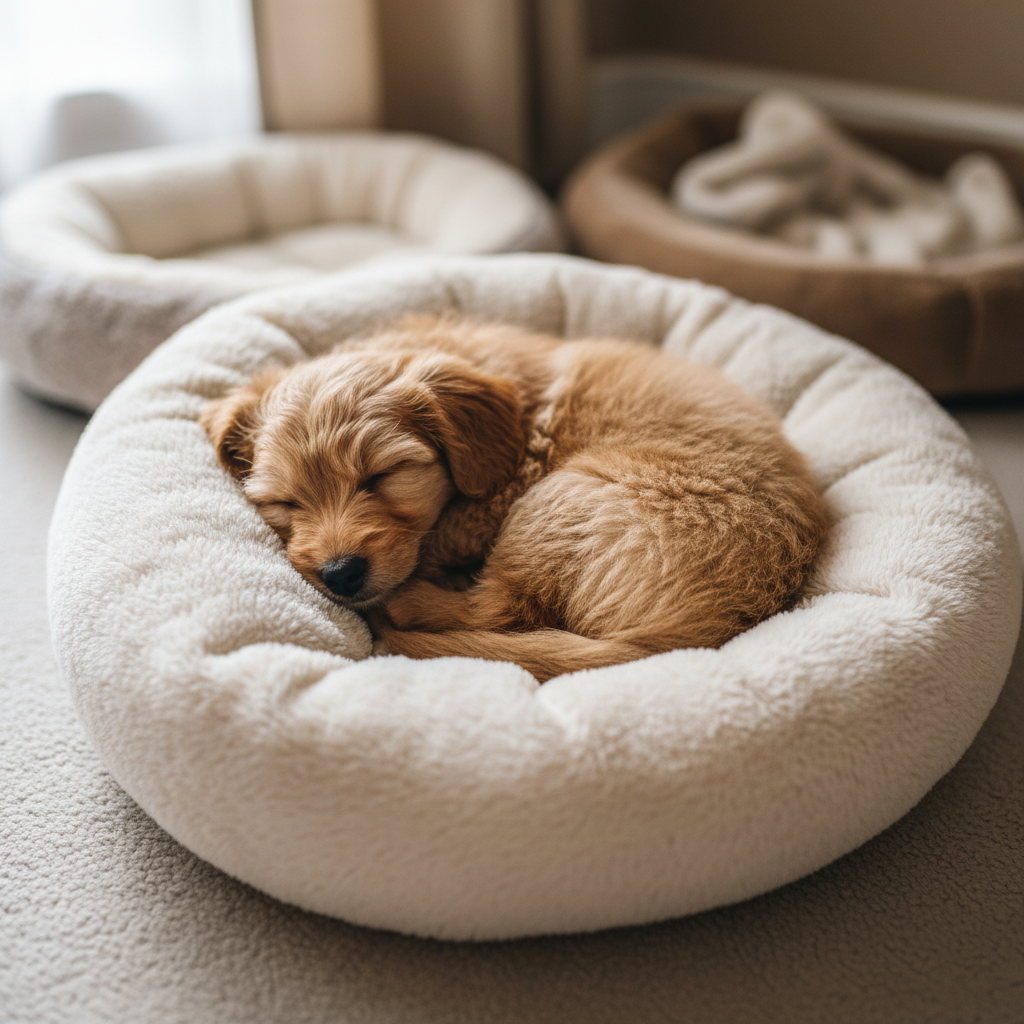
To build good sleep routines for puppy, owners should establish a consistent schedule that includes 18 to 20 hours of daily rest through regular daytime naps and a calming evening wind-down. It is essential to finish the last meal at least three hours before bedtime to allow for digestion; ensuring a final potty break occurs right before sleep also helps prevent nighttime interruptions.
If you are currently reading this at three o'clock in the morning while your puppy treats your ankles like chew toys, you are likely feeling the physical toll of disrupted sleep. It is a common struggle for new owners; however, establishing a consistent rest cycle is the most critical foundation for the neurological development and behavioral stability of your young dog. A fully rested puppy is a more focused learner and a calmer companion. In this guide, we will move beyond basic advice to provide a sophisticated, professional framework for success. You will learn how to implement our signature 10 10 10 rule, structure daytime activity to ensure evening exhaustion, and curate an environment that triggers deep rest. From managing midnight disturbances to adapting schedules as your puppy grows, we provide the practical roadmap needed to transform your household’s sleep quality.
Understanding the Puppy Sleep Requirement
Bringing a new puppy into your Australian home is often a whirlwind of energy, but the biological reality of a growing dog is surprisingly quiet. To build good sleep routines for puppy development, you must first accept that they require 18 to 20 hours of rest every single day. While an adult dog typically settles for 12 to 14 hours, a puppy’s brain and central nervous system are under constant construction. Sleep is the primary time when physical growth occurs and when the brain processes new information and memories.
Puppy sleep cycles are divided into distinct phases that look very different from one another. You will often observe active sleep, where your puppy may twitch, whimper, or appear to be running in their dreams. This is vital REM sleep where neurological development happens. This alternates with deep sleep, which is necessary for physical recovery and immune health. It is essential to let them finish these cycles undisturbed.
A frequent error among new owners is assuming a hyperactive puppy needs more exercise to tire them out. In reality, a puppy acting out, nipping, or racing around with "the zoomies" is often overstimulated and significantly overtired. Much like a human toddler, they lack the self-regulation to stop when they are exhausted. Instead of more activity, they need a structured environment that facilitates rest. Understanding these biological needs is a core component of a comprehensive online training course designed to foster a calm, well-adjusted pet.
The Daytime Foundation: Setting Up for Nighttime Success
To build good sleep routines for puppy success, you must treat daytime hours as the blueprint for their overnight performance. A common misconception is that a puppy who is biting, barking, or racing through the house has excess energy to burn. In most cases, these behaviors are actually signs of an overtired animal reaching its cognitive limit. Implementing forced naps is the most effective way to manage this. Since puppies rarely choose to stop playing on their own, you must guide them to their crate or a quiet space after every 60 to 90 minutes of being awake.
Effective tiredness is achieved through a specific balance of physical activity and mental engagement. While a short walk or game of fetch provides a physical outlet, it is often mental stimulation that truly exhausts a young dog. Engaging in five to ten minutes of focused work from a comprehensive online training course requires significant brain power. This cognitive load is far more effective at settling a puppy than long periods of running, which can actually spike their adrenaline and make it harder for them to relax later.
A successful daily rhythm typically follows a predictable cycle: - A short burst of play or exercise to stretch the legs. - A brief training session to engage the mind and reinforce manners. - A structured, undisturbed nap in a calm environment.
By prioritising these periods of rest throughout the morning and afternoon, you prevent the accumulation of cortisol and adrenaline. This ensures that by the time evening arrives, your puppy is in a calm physiological state, rather than being stuck in a cycle of overstimulation that makes settling for the night nearly impossible.
The 10 10 10 Rule and Other Puppy Sleep Frameworks
To help owners structure wakeful periods, many professionals suggest the 10-10-10 rule. This framework divides a thirty-minute window into three distinct segments: ten minutes of physical exercise, ten minutes of focused training, and ten minutes of free play. Following this specific sequence ensures you address your puppy’s physical needs and mental curiosity without exceeding their limited attention span or physical stamina. It provides a structured bridge between a long nap and the next period of rest.
You may also encounter the 7-7-7 rule, which is frequently recommended for adolescent or adult dogs. This rule typically involves seven minutes of high-intensity activity, seven minutes of training, and seven minutes of calm sniffing or environmental exploration. While effective for older dogs, it is generally not suitable for young puppies under four months old. Younger puppies lack the physical endurance for even seven minutes of high-intensity work and require the more balanced, lower-impact approach of the 10-10-10 rule to avoid joint strain and overstimulation.
Implementing these structured blocks into your day is a practical way to build good sleep routines for puppy development. By keeping wakeful periods intentional and brief, you prevent the adrenaline spikes that cause frantic behavior. Using a comprehensive online training course to guide your ten-minute training segments ensures that the mental work is productive, leaving your puppy ready to settle back into their crate for a deep, restorative sleep.
The Evening Wind-Down Routine

To build good sleep routines for puppy success, the transition from active daytime frameworks to the final overnight stretch requires a deliberate countdown. This wind-down period signals to your puppy’s nervous system that it is time to shift from engagement to restoration. Consistency in this evening phase is just as important as the training you do during the day.
Following a structured timeline helps regulate your puppy's internal clock and physical needs:
3 Hours Before Bed: Serve the final meal of the day. This timing ensures the digestive system has sufficient time to process food, allowing your puppy to empty their bowels during the final toilet break before bed rather than at 2:00 AM.
2 Hours Before Bed: Restrict water intake. While you should never deny a thirsty puppy water, removing the main bowl two hours before lights out reduces the physiological pressure on their small bladder. This is a practical step to minimise middle of the night disruptions.
1 Hour Before Bed: Shift the energy levels entirely. Cease all high-arousal games like tug-of-war or fetch. Transition to low-intensity activities such as gentle brushing or a calm sniffing session where you hide a few pieces of kibble in a rug.
Environment plays a critical role in an Australian home. As the sun sets, begin dimming the lights and lowering the volume of the television or music. These environmental cues are essential for a puppy to begin producing melatonin. If you are working through a comprehensive online training course, this hour is an ideal time to practice passive settling, where you reward your puppy for simply choosing to rest quietly at your feet while the household settles. By reducing sensory input, you make it much easier for them to accept the transition into their crate or bed.
Creating the Ideal Puppy Sleep Environment
Once the household energy has dipped, the physical environment must sustain that calm. To build good sleep routines for puppy development, deciding on a permanent sleeping location is a priority. While many Australian homes utilise the laundry for its easy-to-clean floors, placing the crate in a quiet corner of your bedroom for the first few weeks is often more successful. This proximity provides security for a puppy transitioning away from their littermates and allows you to hear when they actually need a toilet break.
If you are still deciding on a method, researching should I crate train my puppy in Australia will highlight how a crate acts as a safe den. Inside the crate, provide a flat, comfortable bed and a safe chew toy, like a durable rubber toy, to help them self-soothe. Adding a worn t-shirt that smells like you can also significantly reduce separation anxiety.
Australian climates require specific adjustments. During harsh summer nights, ensure the crate is not in the direct path of a blasting air conditioner but has good airflow; a cooling mat can be helpful. In winter, keep the crate away from floor draughts and consider a microwaveable heat pack safely tucked under their bedding. Using these environmental controls, alongside the foundations from a comprehensive online training course, ensures your puppy feels safe enough to enter the deep sleep cycles they require.
How to Handle Middle of the Night Wake-Ups
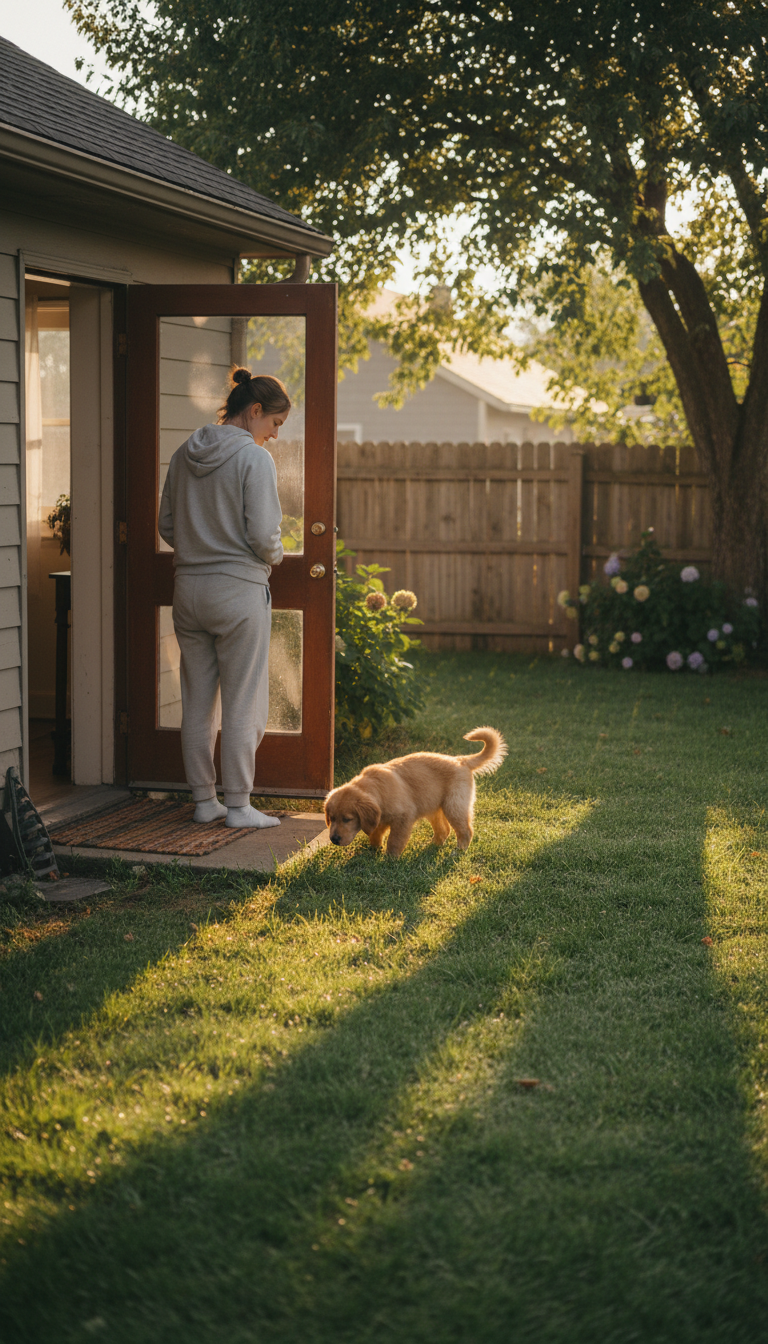
Even with the most comfortable setup, middle-of-the-night wake-ups are a standard part of early puppyhood. To successfully build good sleep routines for puppy development, you must learn to distinguish between a biological necessity and a bid for attention. A "need to go" cry is often sharp, urgent, or involves the puppy moving restlessly in the crate. Conversely, a "want attention" cry is typically a rhythmic, lower-intensity whine that may stop and start as they listen for your reaction.
When you determine it is a toilet need, you must execute the Boring Toilet Break. This protocol ensures your puppy understands that nighttime is for sleeping, not socialising. Keep the house dark and use only a dim torch to navigate. Do not speak to, pet, or play with the puppy. Carry them directly to their designated grass or toilet spot, wait for them to finish, and then immediately place them back in their crate. You can find more detail on timing in our guide on how often to take a puppy out to toilet.
By keeping this interaction entirely transactional, you prevent the puppy from associating waking up with entertainment. If they continue to whine once returned, provide a single, calm verbal cue to settle and then ignore further noise to reinforce the sleep boundary. Consistency here is a cornerstone of any comprehensive online training course and is vital for helping your puppy eventually sleep through until morning.
Age-Specific Sleep Schedules: 8 Weeks to 6 Months
As your puppy matures, the biological need for rest remains high, but the distribution of those hours shifts. To build good sleep routines for puppy growth, you must adapt your schedule to match their increasing bladder capacity and cognitive stamina.
8 to 12 Weeks: This is the most intensive phase. Puppies require approximately 18 to 20 hours of sleep. Their bladder capacity is extremely limited, usually requiring a toilet break every hour they are awake and at least one middle of the night trip. Focus heavily on habituation to the crate and reinforcing it as a safe space using lessons from a comprehensive online training course.
3 to 4 Months: Physiological changes allow for longer overnight stretches, often reaching 7 to 8 hours. While they are more capable, they still require 18 hours of total rest. To understand the specifics of their physical needs during wakeful periods, refer to our guide on how often to take a puppy out to toilet.
5 to 6 Months: Bladder control is significantly improved. At this stage, you can transition to more structured daytime naps; for example, a two hour rest in the morning and another in the afternoon. Total sleep requirements may settle at 16 to 18 hours. Consistency remains vital to prevent the overarousal and testing of boundaries often associated with the onset of adolescence.
Building a reliable sleep routine is one of the most effective ways to help your puppy settle into their new Australian home. By prioritizing consistency and creating a calm environment, you set the stage for restful nights and happier days. While these practical tips offer a great starting point, navigating the early weeks of puppyhood can still feel overwhelming. If you want expert help to master these habits, our online Course provides comprehensive support tailored to your journey; it ensures you have the tools to raise a confident, well-rested companion.