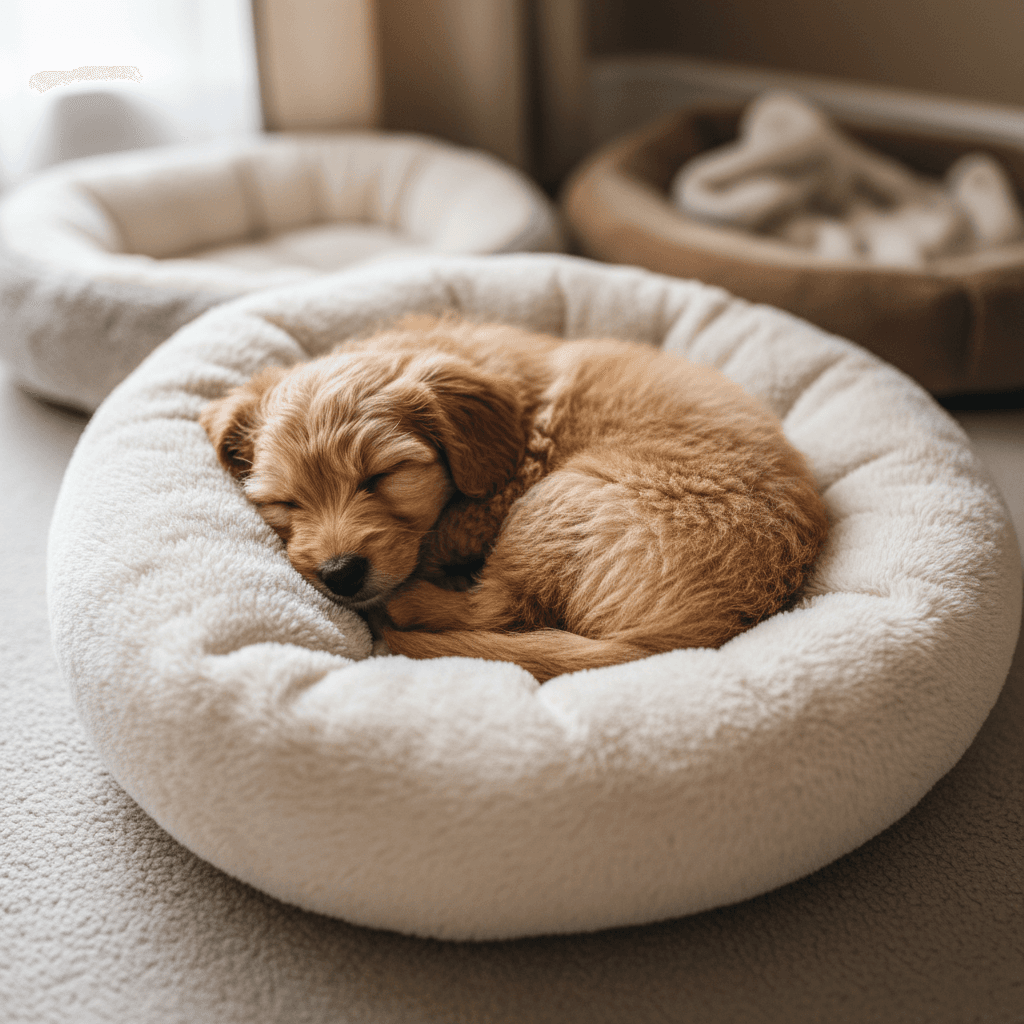
To learn how to stop puppy crying at night, establish a consistent routine and create a comfortable, draft-free sleeping environment located near your bed for security. You should ensure their physical needs are met with a final toilet break, but avoid providing excessive attention or rewards when they cry to help them learn to settle independently.
The first few nights with a new puppy often involve more coffee and less sleep than most Australian owners anticipate. You are likely exhausted, listening to those heart-wrenching whimpers and wondering if you are doing something wrong. While this vocalization is a natural response to a new environment, managing it correctly is vital for your puppy’s development and your own well-being. A poor start can lead to separation anxiety or persistent barking habits that are difficult to break later. This guide provides a professional framework to settle your puppy effectively. We will cover the mechanics of a safe sleep environment, the nuances of crate training, and the essential 'boring' toilet break technique. By understanding when to intervene and when to wait, you will establish a routine that ensures everyone in your household gets the rest they need.
Understanding Why Your New Puppy Is Crying at Night
Bringing a new puppy into your Australian home is an exciting milestone, but the first few nights are often punctuated by persistent vocalisation. Understanding why this happens is the first step toward a quiet house. From a biological perspective, an eight week old puppy has never spent a single moment truly alone. Since birth, they have slept in a huddle, drawing physical warmth and emotional security from their mother and littermates. This sudden littermate withdrawal is a profound shock to their system. When they are placed in a quiet room or a new crate, their survival instinct tells them that being alone is unsafe.
Crying is a puppy’s only way to communicate their needs. It is the tool they use to signal that they are cold, hungry, or that their small bladder is at capacity. For a newly separated eight week old, the cry is a distress signal rooted in a search for safety. In contrast, if you are managing a four month old puppy, the reasons often shift. At this age, crying may stem from established habits, where the puppy has learned that noise results in a reward, or it may indicate more complex separation anxiety that has developed during their first few weeks in the home.
Our philosophy at Online Puppy School focuses on fostering emotional security rather than merely seeking compliance. A puppy who feels secure in their environment will naturally become a quiet, restful companion. If you want to build this foundation of trust, our complete online training course offers a step by step guide to help your puppy feel safe enough to sleep through the night. Understanding these biological drivers is essential before you can effectively address how to stop puppy crying at night.
The First Night Home: Establishing a Safe Sleep Environment
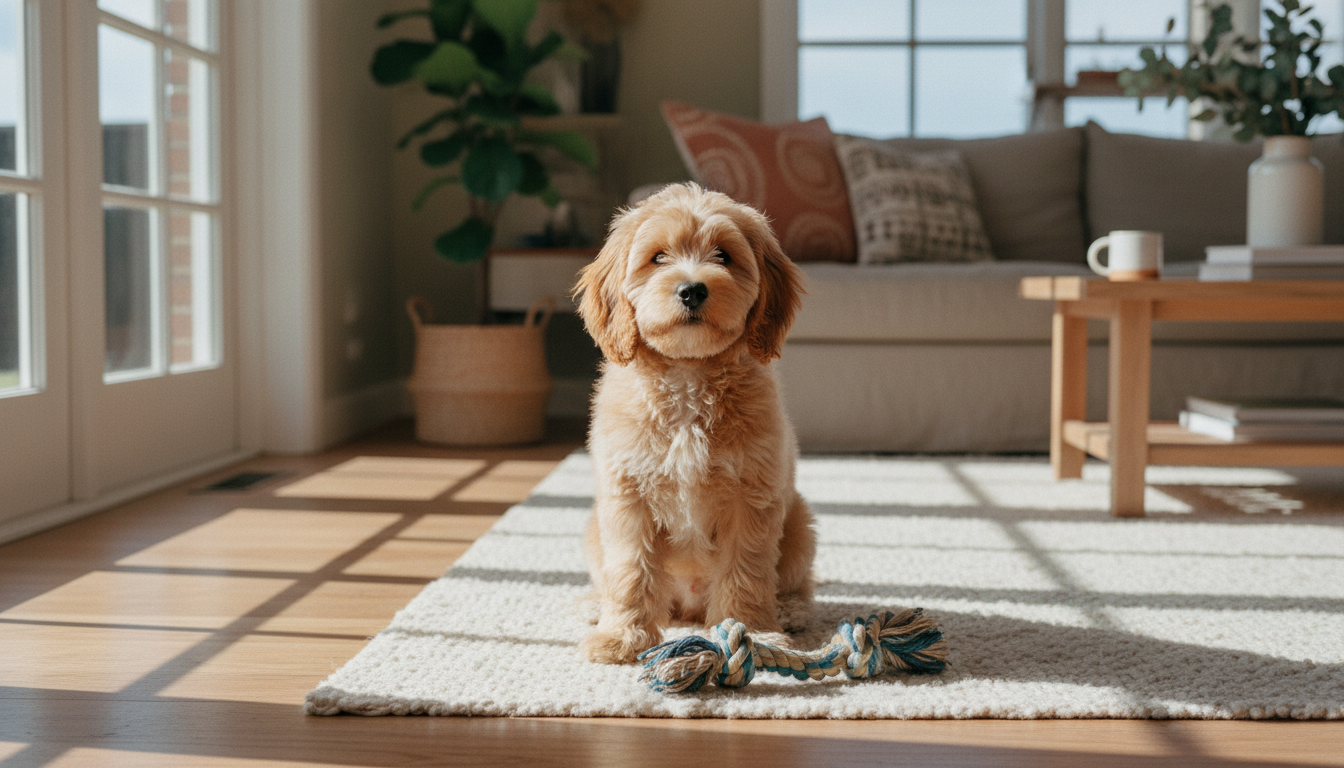
Setting up the physical environment correctly on day one is the most effective way to prevent a cycle of distress. A common mistake in Australian households is placing a new puppy straight outside in a kennel or tucked away in a distant laundry on their very first night. While the intention is often to foster independence or protect flooring, this sudden isolation usually leads to intense fear and vocalisation. Instead, we recommend placing the puppy's crate or a high sided box in your bedroom, ideally within arm's reach of your bed. This proximity allows them to hear your rhythmic breathing, which mimics the presence of their littermates and provides immediate emotional reassurance.
To enhance this sense of security, you should utilise the Scent Method. This involves placing a t-shirt you have recently worn into the puppy’s bed. Because a dog’s sense of smell is their primary way of navigating the world, having your familiar scent wrapped around them acts as a powerful calming agent. When the puppy wakes in the dark, the scent signals that they are not alone, which is a key strategy when learning how to stop puppy crying at night.
If you do not intend for your dog to sleep in your bedroom long term, you can employ the Walking Bed technique. This method involves starting the puppy in your room to establish safety and then gradually moving their crate toward the bedroom door, into the hallway, and finally to their permanent sleeping spot over the course of two to three weeks. This transition respects the puppy's developmental pace and prevents the panic that occurs when they are suddenly forced into a solitary environment. If you find your specific home layout makes this difficult, our complete online training course provides tailored floor plan layouts to help you manage this transition effectively. Establishing this safe zone early ensures the puppy views their bed as a sanctuary rather than a place of exile.
How to Stop Puppy Crying at Night in a Crate
Transitioning from a general sleep space to a dedicated crate requires a shift in how you present this environment to your puppy. To successfully address how to stop puppy crying at night in crate setups, the space must be perceived as a secure den rather than a prison. In the wild, canines naturally seek out small, enclosed areas for protection; our goal is to recreate that sense of biological safety within your home.
Start by considering the specific micro-climate of your Australian home. Our houses are often designed for airflow, which can create hallway wind tunnels during winter nights. Ensure the crate is positioned away from these draughty areas to prevent your puppy from waking up cold and crying for warmth. Conversely, during intense summer months, a puppy can quickly become distressed if they overheat. Placing a pressure activated cooling mat inside the crate ensures they remain comfortable enough to settle despite the humidity.
Sensory management is equally vital for a restful night. Draping a thick, breathable blanket over the top and sides of the crate creates a cocoon effect, dampening ambient house noises and blocking out visual stimuli that might otherwise keep a young dog alert. Within this den, you can introduce auditory comfort to replace the silence of the room. A ticking clock wrapped in a soft cloth or a dedicated white noise machine provides a rhythmic sound that mimics the heartbeat of their mother. This simple addition can bridge the emotional gap between the security of the litter and the solitude of their new bed.
If your puppy continues to struggle with the concept of confinement, our complete online training course provides a detailed step by step schedule to help them bond with their space. By focusing on these environmental triggers, you proactively address the root causes of vocalisation. Once the physical environment is optimised, you can then begin to differentiate between the various types of cries you might hear throughout the night.
Should You Ignore a Crying Puppy or Attend to Them?
Determining whether to ignore a crying puppy or attend to them is one of the most stressful decisions for a new owner. While traditional advice often suggests letting them cry it out, this approach lacks the nuance required for building a healthy bond. To understand how to stop puppy crying at night, you must first learn to identify the three distinct types of vocalisation.
The Toilet Whine: This is typically a repetitive, low-intensity sound. Because puppies have limited bladder control, this is a functional request that requires a quick, boring response to avoid an accident in the crate.
The Terrified Scream: This is high-pitched, frantic, and sounds like genuine panic. This indicates littermate withdrawal or a fear of isolation. Ignoring a terrified puppy can lead to long term anxiety and damage the foundational trust between you and your pet.
The Attention Demand: This usually manifests as a sharp, rhythmic bark or insistent whine. It often occurs after a toilet break when the puppy decides they would rather play than sleep. Rewarding this demand by letting them out for cuddles creates a persistent habit that is difficult to break later.
To navigate these sounds effectively, we recommend the 5-minute rule. When your puppy starts to vocalise, wait for five minutes to observe the trajectory of the sound. Most settling groans or minor protests will cease within this window as the puppy finds a comfortable position. However, if the crying escalates or remains constant, you must intervene, as they likely have a physical need or are experiencing a level of fear that prevents them from self-soothing. For owners who are unsure how to differentiate these sounds, our complete online training course provides deeper behavioural analysis and troubleshooting steps to help you respond correctly without reinforcing bad habits.
The Boring Toilet Break: Handling Nighttime Needs
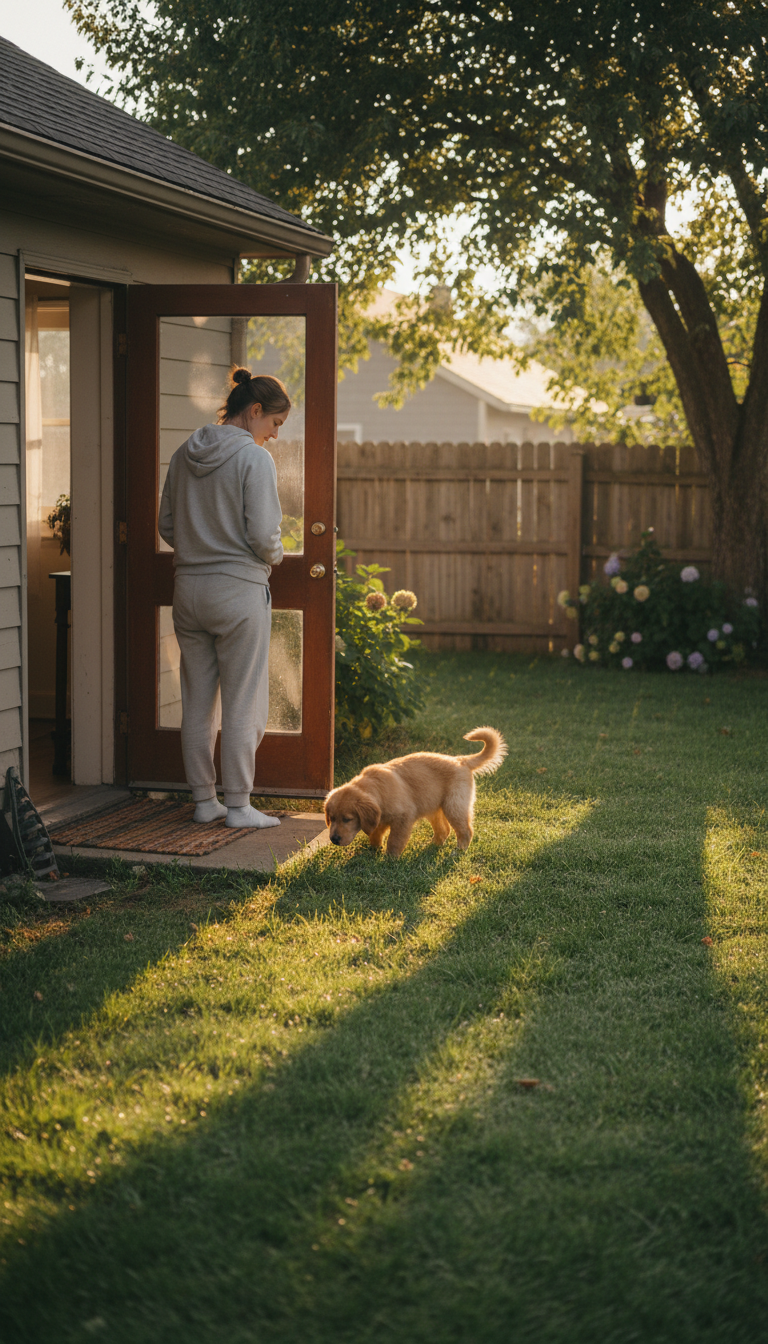
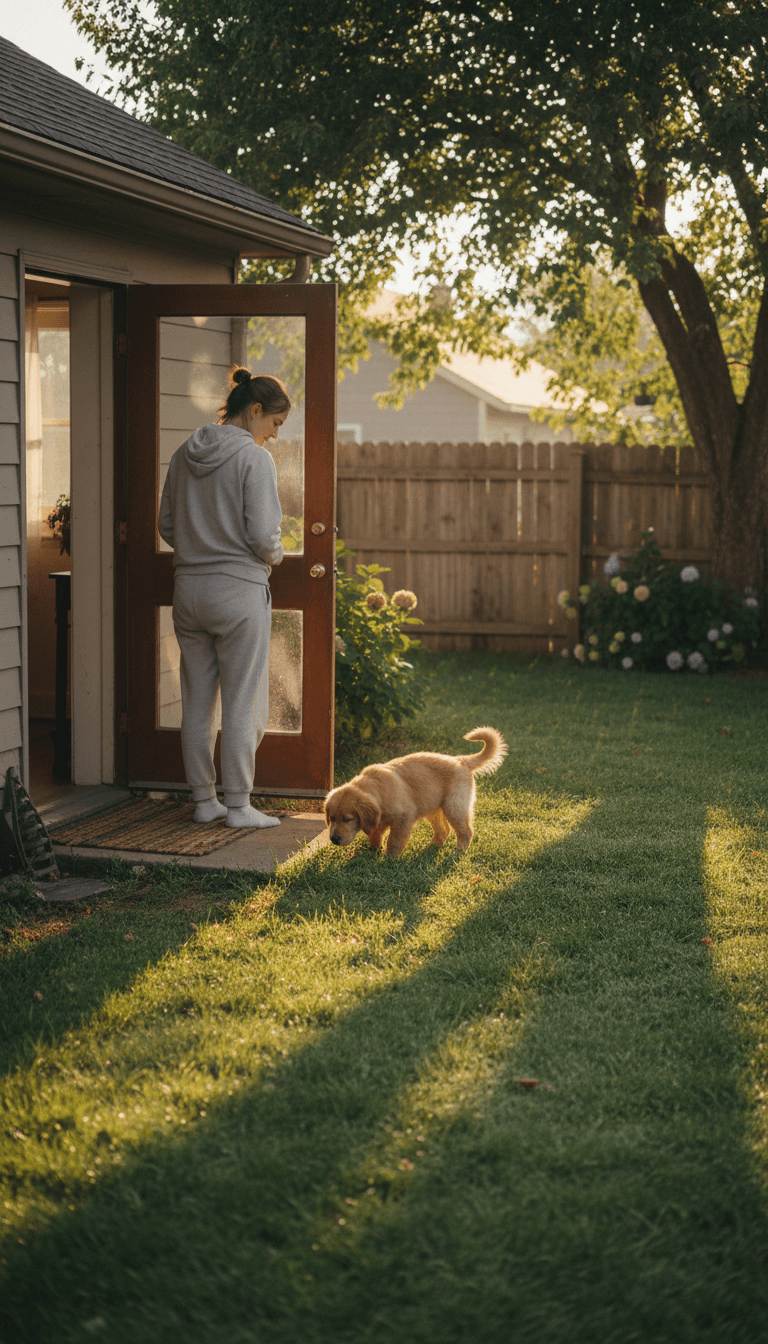
Once you determine that a vocalisation is a toilet whine rather than a fear-based scream, you must act swiftly but silently. The secret to long-term success is making every interaction between 10 PM and 6 AM incredibly boring. A boring toilet break ensures your puppy does not begin to view these wake-up calls as opportunities for socialisation or midnight snacks. By keeping the environment dull, you are teaching your puppy how to stop puppy crying at night when the motive is simply a desire for company.
Keep the lights low and avoid making eye contact. Carry your puppy directly to their designated toilet spot without any play or high-pitched praise. Using a squeaky, excited "good boy" or "good girl" voice will overstimulate their nervous system, making it much harder for them to settle back into a deep sleep. This trip is purely for business. Biologically, puppies have very little control; a reliable rule of thumb is that a puppy can usually hold their bladder for their age in months plus one hour. For an eight-week-old puppy, this means they will physically need to go every three hours.
After they have finished, place them immediately back into their crate or bed. No treats, no cuddles, and no talking. If you struggle to get your puppy to settle again after these necessary interruptions, our complete online training course provides a clear framework for building consistent sleep habits that respect your puppy's physical limits.
Common Mistakes that Reward Nighttime Whining
Even when you follow the boring toilet break protocol, it is easy to fall into traps that accidentally reinforce the very behaviour you want to eliminate. One of the most common errors is releasing a puppy from their crate while they are actively barking or whining. When you open that door during a vocalisation, you are providing a powerful reward for the noise. The puppy learns that noise is the key that unlocks the door, which makes it much harder to implement strategies on how to stop puppy crying at night effectively.
Another frequent pitfall is the delayed surrender. Many owners try to ignore the crying but eventually give in after an hour of persistent noise, bringing the puppy into their own bed to get some sleep. From the puppy’s perspective, they have just learned that persistence pays off; they simply have to cry for sixty minutes to get what they want. This accidental stamina training creates a dog that will vocalise longer and louder the following night because the reward was so high.
Finally, avoid offering food or high value treats during middle of the night wakeups. Providing a snack creates a biological incentive for the puppy to wake up, as their digestive system begins to expect a midnight meal. If these habits have already started to take root in your home, our complete online training course provides specific retraining protocols to reset these expectations and restore quiet to your household. Consistent boundaries are the only way to ensure your puppy feels secure enough to settle without needing to demand your attention.