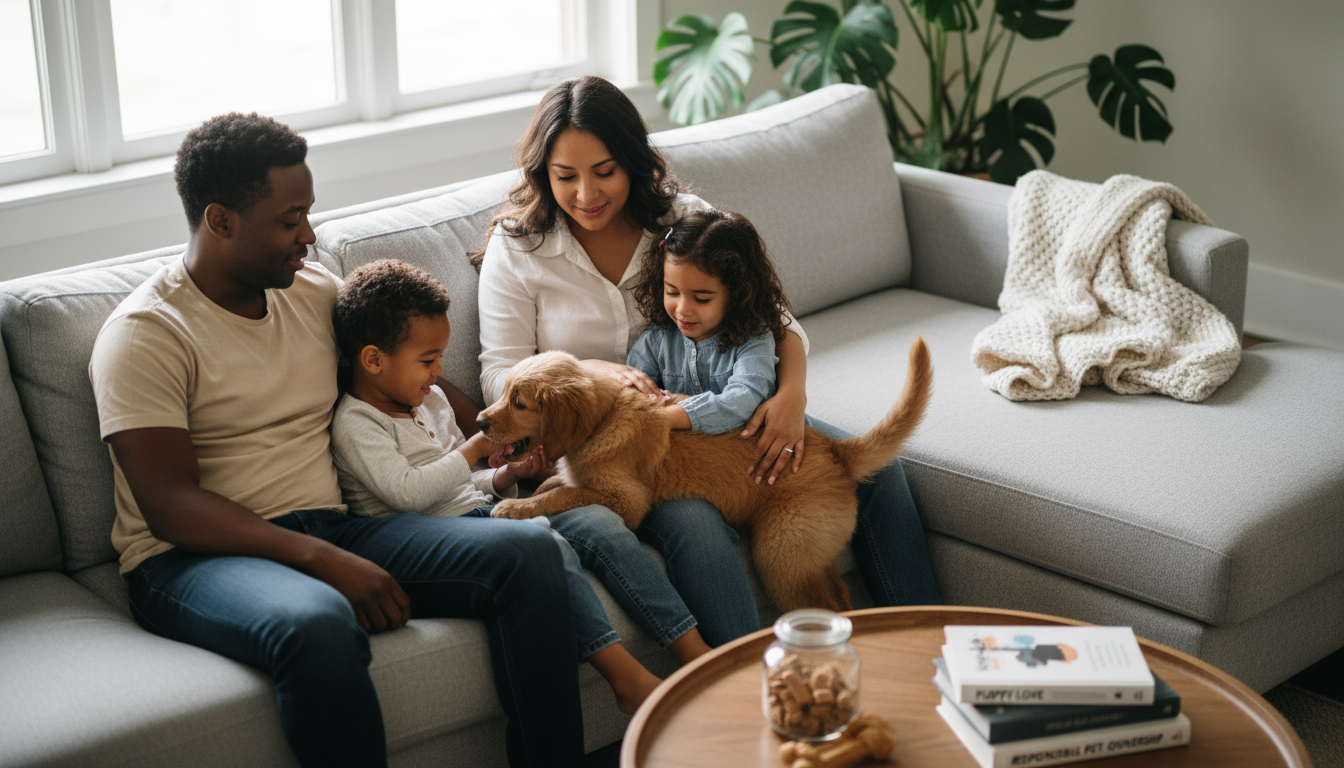
Positive reinforcement, supervised interactions, and providing a dedicated safe zone help puppy feel confident around children. Owners should encourage children to sit quietly during introductions and reward the puppy for remaining calm at a distance; this ensures all social encounters are positive and stress-free.
Bringing a new puppy into a bustling Australian household often comes with the vision of a seamless bond between your pet and your children. However, the reality frequently involves sharp puppy teeth, overwhelming excitement, and a pup that feels more anxious than confident. When your puppy perceives children as unpredictable or frightening, it creates a stressful environment for everyone; establishing a foundation of trust is essential to prevent fear based behaviors and ensure your dog grows into a reliable companion. In this guide, we provide practical, expert strategies to navigate these early interactions successfully. You will learn how to set up your home for safety, interpret subtle stress signals, and implement structured protocols like the 7 7 7 and 10 10 10 rules. We also explore low arousal games, toddler specific safety, and step by step introduction techniques designed specifically for busy families who want professional results.
Why Puppies Often Feel Anxious Around Kids
Puppies perceive the world through a much more sensitive sensory lens than humans. To a young dog, a child represents a whirlwind of unpredictable movements and high-pitched sounds that can easily trigger sensory overload. When a child runs or squeals, it can inadvertently activate a puppy’s prey drive, leading to nipping, or its fear response, causing the puppy to cower or growl.
It is vital for parents to distinguish between a mean puppy and a scared puppy. If your dog snaps when a child approaches too quickly, they aren't displaying inherent aggression; they are often communicating that they feel overwhelmed or unsafe. To help puppy feel confident around children, you must move beyond simple exposure. Merely having the puppy in the same room as a chaotic playgroup does not build trust. In fact, flooding them with too much activity can increase their anxiety and reinforce their fear.
Building genuine confidence requires creating specific, positive associations. This means the puppy learns that the presence of a child predicts calm, rewarding experiences rather than a loss of personal space or a startling surprise. Our comprehensive online training course provides structured exercises to manage these early interactions safely. If you are noticing persistent signs of stress during these moments, feel free to contact our trainers for personalized guidance on navigating your puppy's unique temperament.
Setting Up Your Australian Home for Success
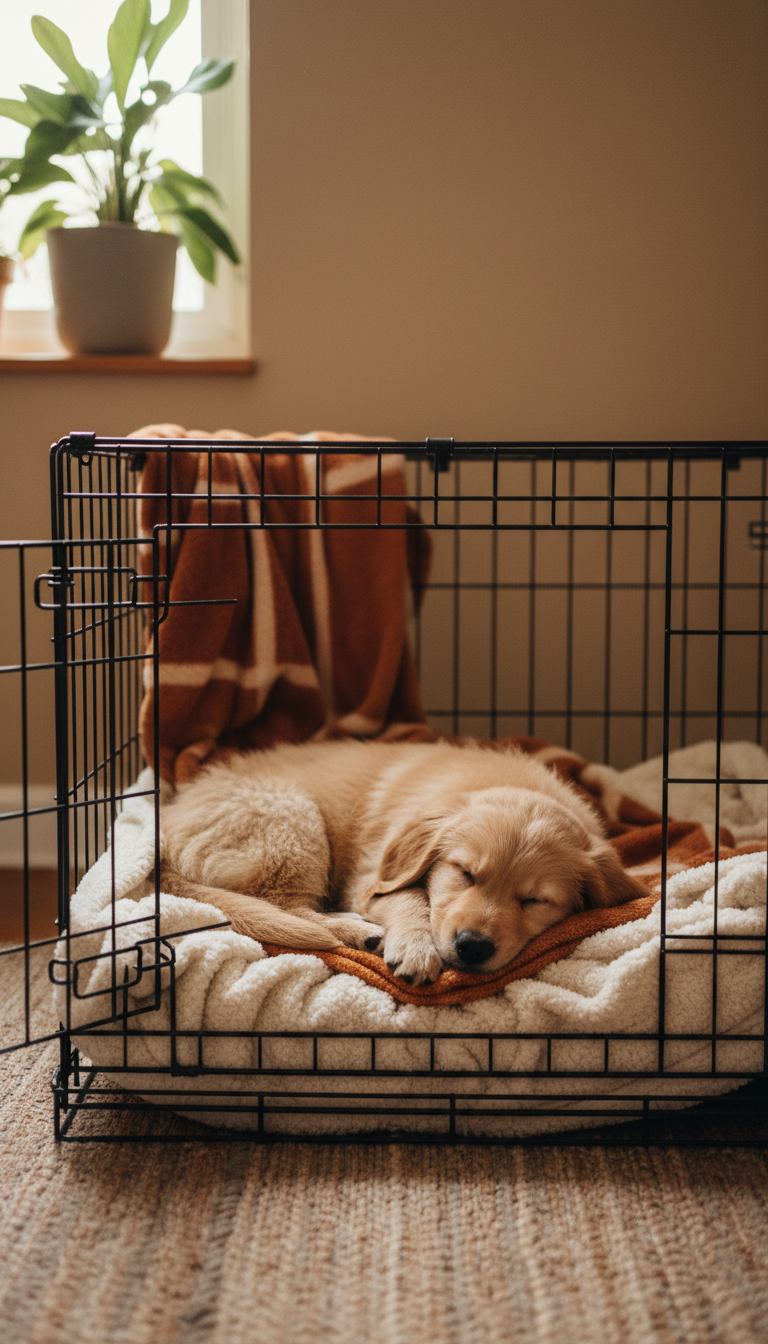
To effectively help puppy feel confident around children, you must first design an environment that prevents conflict before it starts. In many Australian homes, the open-plan layout of the kitchen, dining, and living areas can be overwhelming for a young dog because there is nowhere to hide from the household hustle. Establishing a designated Safe Zone is the most critical step in your home setup.
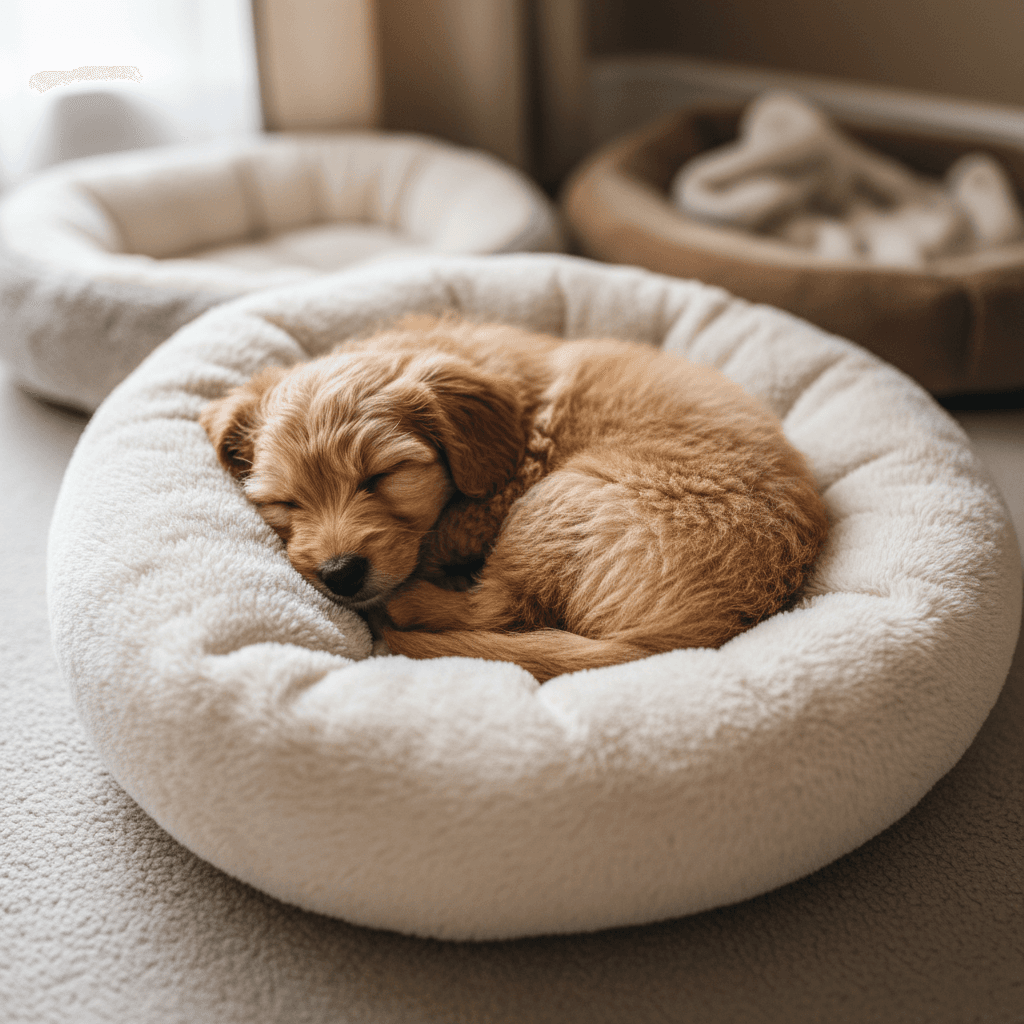
A Safe Zone, such as a sturdy crate or a modular playpen, acts as a sanctuary where your puppy can decompress. It is essential to enforce a strict family rule: when the puppy is in their zone, children are forbidden from entering, leaning over, or reaching through the bars. This physical boundary ensures the puppy never feels cornered or trapped. By using baby gates to section off specific dog-only areas, you implement a separate but together strategy. This allows your puppy to observe the children’s movements and high-pitched play from a distance without the pressure of direct physical contact.
This approach is far more effective than forcing constant interaction. It gives the puppy the choice to engage or retreat, which is the foundation of true confidence. If you need help choosing the right equipment or layout for your specific floor plan, our comprehensive online training course includes detailed modules on home management. For those dealing with unique architectural challenges or narrow hallways, you can contact our trainers for expert advice on creating flow. By managing the environment first, you ensure that every future interaction remains positive and entirely within the puppy’s comfort level.
The First Introduction: Step by Step Guide
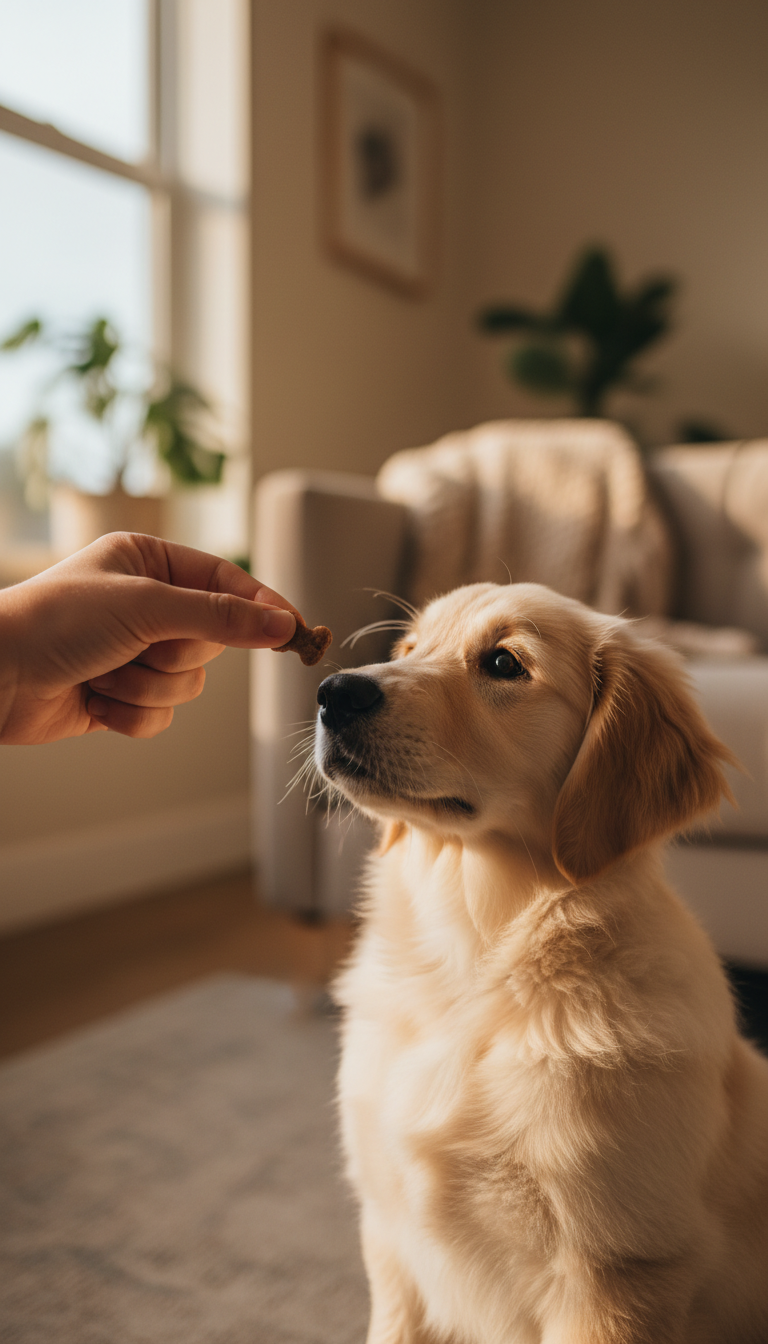
Once your home is partitioned into safe zones, you can move toward the first physical meeting. To help puppy feel confident around children, this introduction must be structured as a choice-based activity rather than a forced encounter. Following a literal protocol ensures that the puppy associates the child’s presence with safety and high-value rewards rather than stress or restriction.
One child at a time: Introducing the entire family at once is overwhelming. Start with one child to keep the energy levels low and manageable.
The child sits calmly: Have the child sit on the floor or a small stool. This reduces the child's height, making them appear less like a looming figure and more like a neutral part of the environment.
Freedom of movement: Keep the puppy on a loose lead or let them move freely in a fenced area. Never hold the puppy down or physically restrain them to endure pats. If the puppy feels trapped, their only way to communicate discomfort may be through a nip.
The puppy makes the first move: Instruct the child to keep their hands in their lap and wait. Let the puppy approach at their own pace to sniff. If the puppy chooses to walk away, let them go.
During this process, use high-value treats such as small pieces of boiled chicken or cubes of cheddar cheese. These are far more effective than standard dry kibble for building positive associations. The child can gently drop a treat on the floor a small distance away, which encourages the puppy to approach without the pressure of direct hand-to-mouth contact. If you are unsure how to read your puppy's initial reactions, our comprehensive online training course offers visual guides to help you identify the exact moment to step in. For families with particularly shy breeds, you can also contact our trainers for a tailored introduction plan.
How to Introduce Dog to Toddler and Young Children
Introducing a puppy to a toddler requires a different strategy than with older children because children aged one to three years old lack impulse control and possess unpredictable motor skills. To help puppy feel confident around children in this age bracket, you must prioritise parallel play. This involves having both the puppy and the toddler in the same room while they engage in entirely separate activities. The puppy might enjoy a long lasting chew in their playpen while the toddler plays with blocks on the other side of the room. This setup allows the puppy to habituate to the toddler’s sudden movements and high pitched squeals without the threat of being grabbed or startled.
For a one year old who is just finding their feet, the focus should remain on passive observation from behind a sturdy barrier. For a two year old, you can introduce helpful tasks to build a positive bond without direct physical contact. Instead of allowing the child to hug or pat the puppy, which is often perceived as a threat by a young dog, teach the toddler to drop a small treat on the floor from a safe distance of two metres. This action frames the toddler as a provider of rewards rather than a source of physical overwhelm. By the age of three, children can begin to learn basic boundaries, such as standing still like a statue if the puppy becomes too bouncy. Our comprehensive online training course includes specific modules on toddler safety and management. If you are struggling to balance a crawling child and a nipping puppy, feel free to contact our trainers for a customised home setup guide.
Recognising Puppy Body Language and Stress Signals
While successful introductions with toddlers rely on management, your ability to read subtle cues is what will truly help puppy feel confident around children over the long term. Many owners mistakenly assume a wagging tail always indicates a happy dog, but a stiff, fast wag can actually signal high arousal or anxiety. You must look for displacement behaviours that suggest your puppy is trying to cope with internal stress.
Key signals include the whale eye, where the puppy keeps their head still but follows a movement with their eyes until the whites are visible. Watch for repetitive lip licking or yawning when the puppy is clearly not tired; these are common self-soothing mechanisms. After an intense interaction, a puppy may perform a shake-off, which looks like they are drying themselves after a bath. This is a physiological reset used to release tension and should be seen as a sign that the previous interaction was a bit too much.
The most important signal is displacement. If your puppy moves away, turns their head, or hides behind your legs, they are clearly communicating a need for space. You must act as your puppy’s advocate by teaching children that if the puppy leaves, they must not follow. Respecting these small requests for distance prevents the puppy from feeling they need to escalate to a growl. For a deeper look at canine communication, our comprehensive online training course provides video examples of these behaviours in real time. If you are ever unsure if your puppy is playing or stressed, you can contact our trainers for a professional assessment.
Understanding the 7 7 7 Rule and 10 10 10 Rule for Puppies
Understanding specific developmental milestones is essential to help puppy feel confident around children. The 3-3-3 rule, occasionally referred to as the 7-7-7 rule in some Australian training circles, outlines the standard decompression timeline. During the first three days, your puppy is often in a state of shock and requires significant space from excited children. By three weeks, they begin to grasp the household routine, such as the timing of the morning school run. After three months, the puppy typically feels secure enough to show their true personality.
To complement this timeline, the 10-10-10 rule encourages exposing your puppy to ten new people, ten different surfaces, and ten unique sounds. When children are involved, you must prioritise quality over quantity to avoid flooding, which is a state of psychological shutdown caused by too much stimuli. Instead of meeting ten children at a busy park, introduce your puppy to one calm child on grass, then later on floorboards or sand. This controlled variety builds resilience without triggering fear. Our comprehensive online training course provides structured checklists for these milestones. If your puppy seems to be regressing during any of these stages, you can contact our trainers to adjust your socialization strategy.
Puppy Games vs Kid Games: Keeping Arousal Levels Low
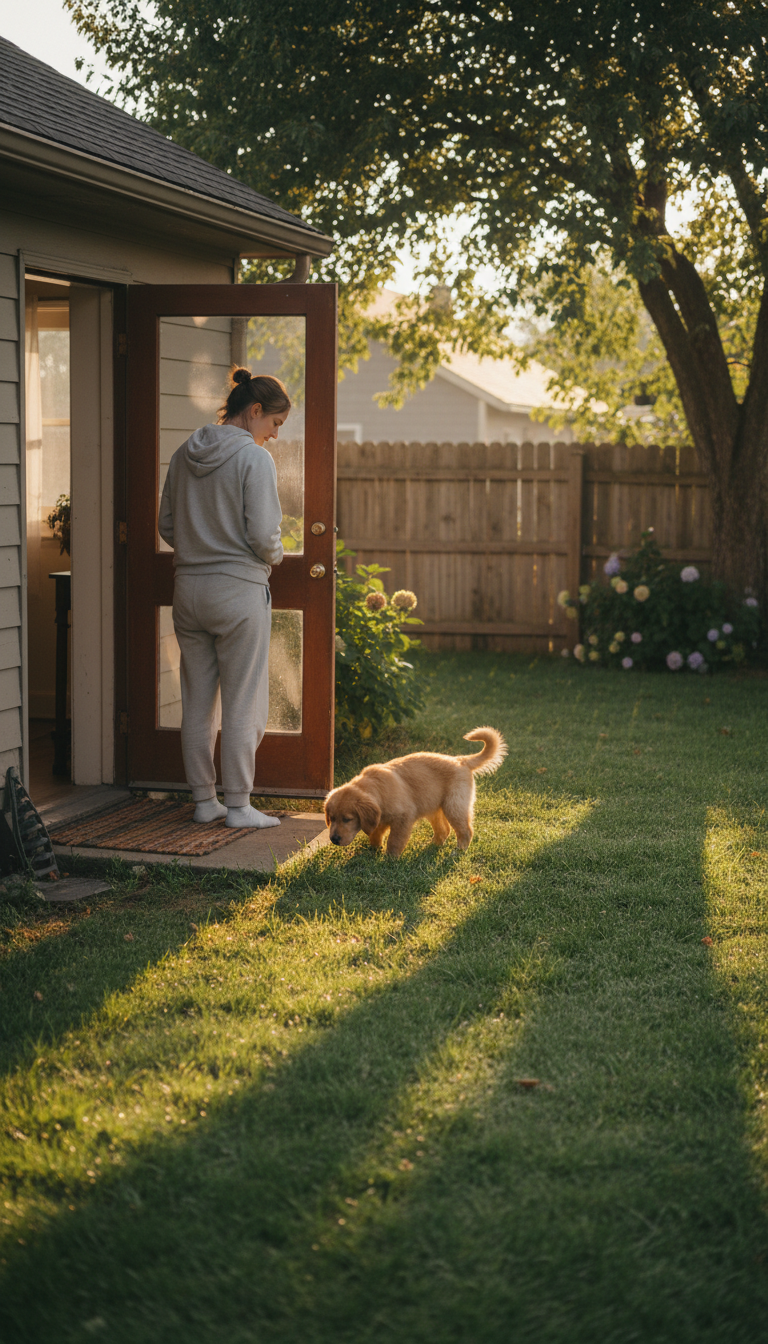
In the context of the Australian backyard, games like backyard cricket, tag, or wrestling are staples of childhood. However, these high arousal activities are often the primary source of conflict between a young dog and a child. When children run fast, wave bats, or squeal, it triggers the puppy’s predatory motor pattern. This leads to jumping, garment grabbing, and nipping. When a puppy nips, the child often reacts with fear or a loud noise, which either further excites the puppy or creates a negative association with the child, ultimately damaging the puppy's confidence.
To help puppy feel confident around children, you must redirect this energy into structured, low arousal play. Instead of games of chase, introduce scent based activities like "Find the Treat." Have your child hide high value treats around the lawn or living room while the puppy is in their safe zone, then let the puppy out to sniff them out. This engages the puppy’s nose, which is a naturally calming activity that lowers their heart rate. Gentle fetch, where the child rolls a ball along the ground rather than throwing it high, keeps the puppy’s four paws on the floor and prevents over-excitement.
Involving children in basic trick training, such as "sit" or "touch," transforms the relationship into one of calm communication. It teaches the child to be a clear communicator and the puppy to look to the child for guidance rather than as a wrestling partner. Our comprehensive online training course provides age appropriate training games that keep excitement levels below the nipping threshold. If your puppy becomes over-aroused the moment the kids step outside, contact our trainers for strategies to lower the environmental intensity before play begins.
Why Online Puppy School is Ideal for Families with Children
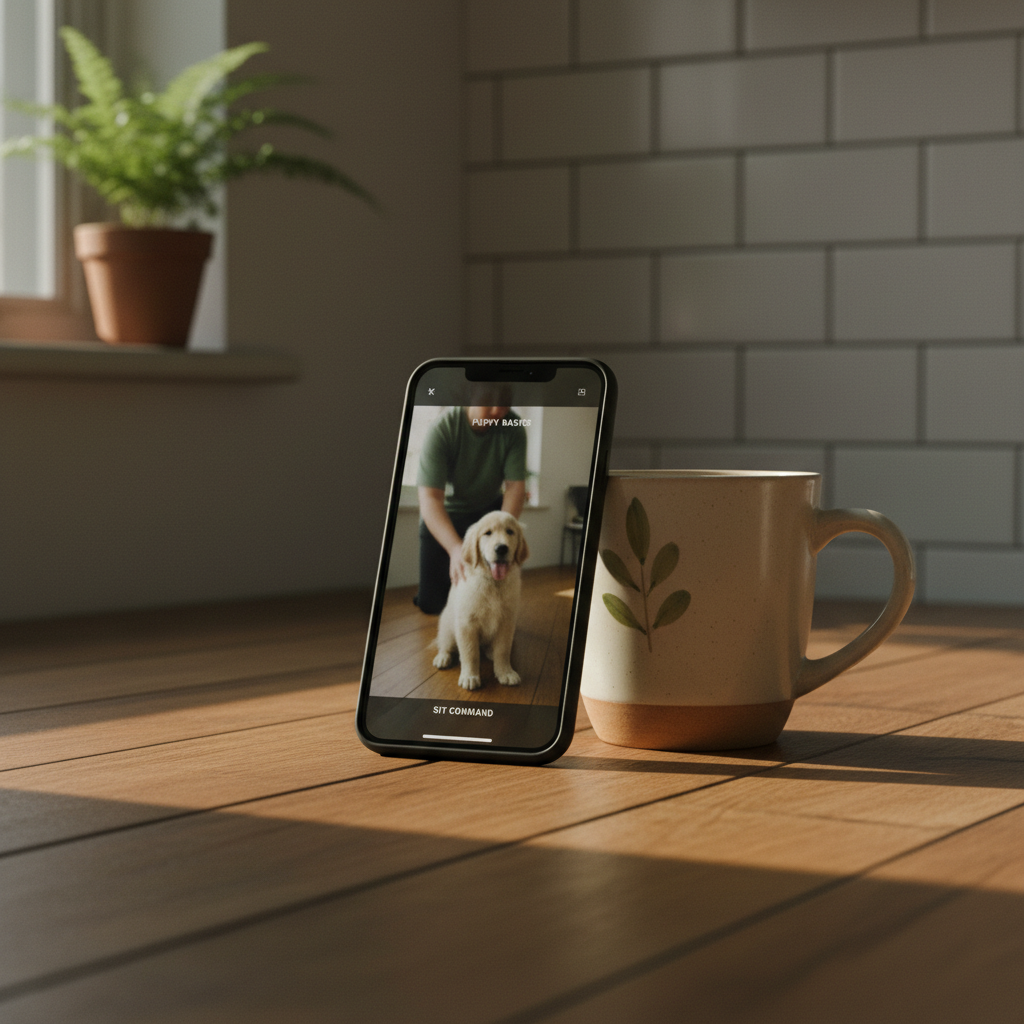
Traditional group classes often prove chaotic for young families. The noise of multiple barking dogs and the presence of strangers can create a high-pressure environment where it is difficult to help puppy feel confident around children. Instead of focusing on the lesson, your puppy may become overstimulated or fearful; meanwhile, your children might struggle to hear instructions over the commotion.
Online training offers a controlled alternative by allowing your entire family to participate together from the comfort of your Australian living room. This format ensures everyone stays consistent with commands and boundaries without the stress of travel or external distractions. Crucially, practicing at home addresses the reality that 90% of child-dog interactions occur within your daily living spaces. Training on your own floorboards or in your specific backyard allows the puppy to build skills exactly where they are most needed. Our comprehensive online training course allows you to move at a pace that respects your puppy’s individual developmental stages. For specific household challenges, you can always contact our trainers for expert support.
Teaching your puppy to feel safe and confident around children is a gradual process that relies on positive experiences and consistent supervision. When you prioritize patience and clear boundaries, you help foster a lasting bond between your pets and your family. If you ever feel like you would benefit from professional guidance tailored to your specific needs, our Course offers a more detailed path forward. We are here to help you navigate these early stages so that your household remains a calm, happy environment for everyone involved.