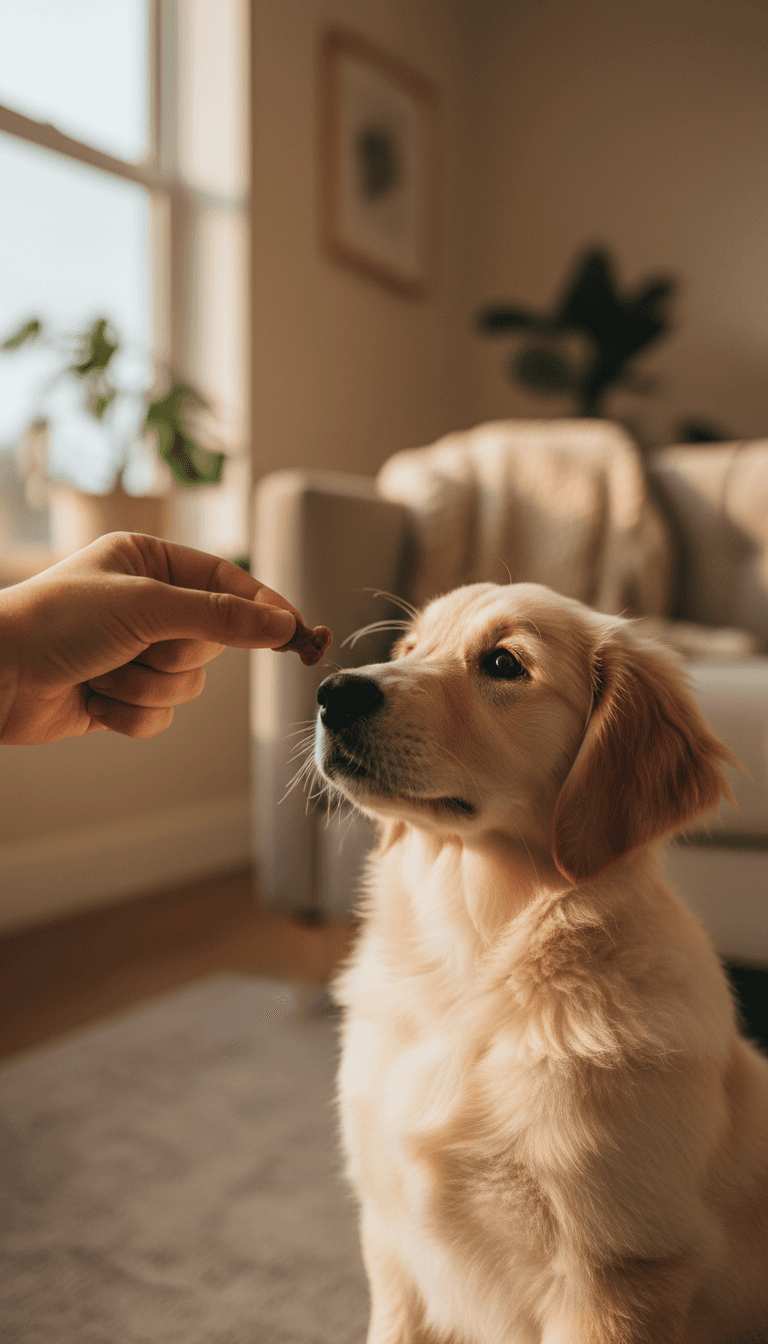
To teach puppy leave it command, start by holding a treat in a closed fist and rewarding your pet only when they stop sniffing or pawing at your hand. Once they consistently ignore the item, introduce the verbal cue and practice with treats on the floor to build reliable self control and safety.
Every Australian puppy owner knows the heart-stopping moment when their pup lunges for a discarded chicken bone or a suspicious-looking garden toad. It is a frantic race against time that often ends in a stressful tug of war. Mastering the leave it command is not just about protecting your Sunday roast; it is a critical safety barrier that prevents your dog from ingesting toxic substances or approaching dangerous local wildlife. In our unique Australian environment, this skill is often the difference between a minor distraction and an emergency vet visit. In this guide, we provide a professional, step-by-step framework to help you master this essential cue. You will learn how to distinguish leave it from drop it, select the right rewards for maximum motivation, and transition from indoor drills to real-world backyard scenarios.
Why the Leave It Command is a Life Saving Skill for Australian Puppies
In the world of canine education, few skills carry as much weight as the ability to disengage from a distraction on cue. While many owners view it as a simple manners exercise, the leave it command is actually a critical safety tool designed to protect your dog in high stakes situations. In Australia, our unique environment presents specific risks that make this command non negotiable for any responsible pet owner.
A reliable leave it can be the difference between a routine walk and an emergency trip to the vet. Our parks and backyards are home to hazards that range from the irritating to the lethal. Your puppy might encounter a paralysis tick clinging to a fallen branch, discarded scraps left behind by an ibis, or even dangerous wildlife like eastern brown snakes and redback spiders. By teaching your puppy to immediately turn away from these threats, you provide them with a life saving response that works faster than you can physically intervene.
Beyond immediate physical safety, this skill serves as the bedrock of impulse control. Many training challenges, such as jumping on guests or lunging at passing bikes, stem from a puppy's inability to manage their own excitement. When you teach puppy leave it command fundamentals, you are training the brain to pause and look to you for direction rather than reacting on instinct. This mental discipline is a core component of our complete online puppy training course, ensuring your dog grows into a calm and focused companion who can navigate the complexities of Australian life with ease.
Leave It vs Drop It: Understanding the Key Differences
Many new owners use these terms interchangeably, but for a dog, they represent two distinct concepts. Understanding the difference is vital for effective communication and safety. When you begin to teach puppy leave it command techniques, it is essential to recognize that it is a preventative cue. It tells your puppy to ignore something before they have made physical contact with it. You use this when you spot a piece of chocolate on the kitchen floor or a curious lizard in the grass. The goal is to keep the item out of the puppy's mouth entirely.
Conversely, "Drop It" is a reactive cue. It is used when the puppy already has an object in their possession, such as a stolen sock or a dangerous scrap found on a walk. This command instructs them to open their jaws and release the item immediately.
Feature | Leave It | Drop It |
|---|---|---|
Timing | Preventative (Before contact) | Reactive (During contact) |
Goal | Disengage and ignore | Open jaws and release |
Scenario | Spotted a snake or dropped food | Holding a rock or a shoe |
While our complete online puppy training course covers both, mastering the distinction ensures your puppy does not hesitate. If you use "leave it" while they are already chewing a toxic plant, the command is technically impossible to follow because they have already engaged. Clear cues lead to faster responses, which is essential when seconds count in the Australian bush or on a busy suburban street.
Preparation: Choosing Your Training Highs and Lows
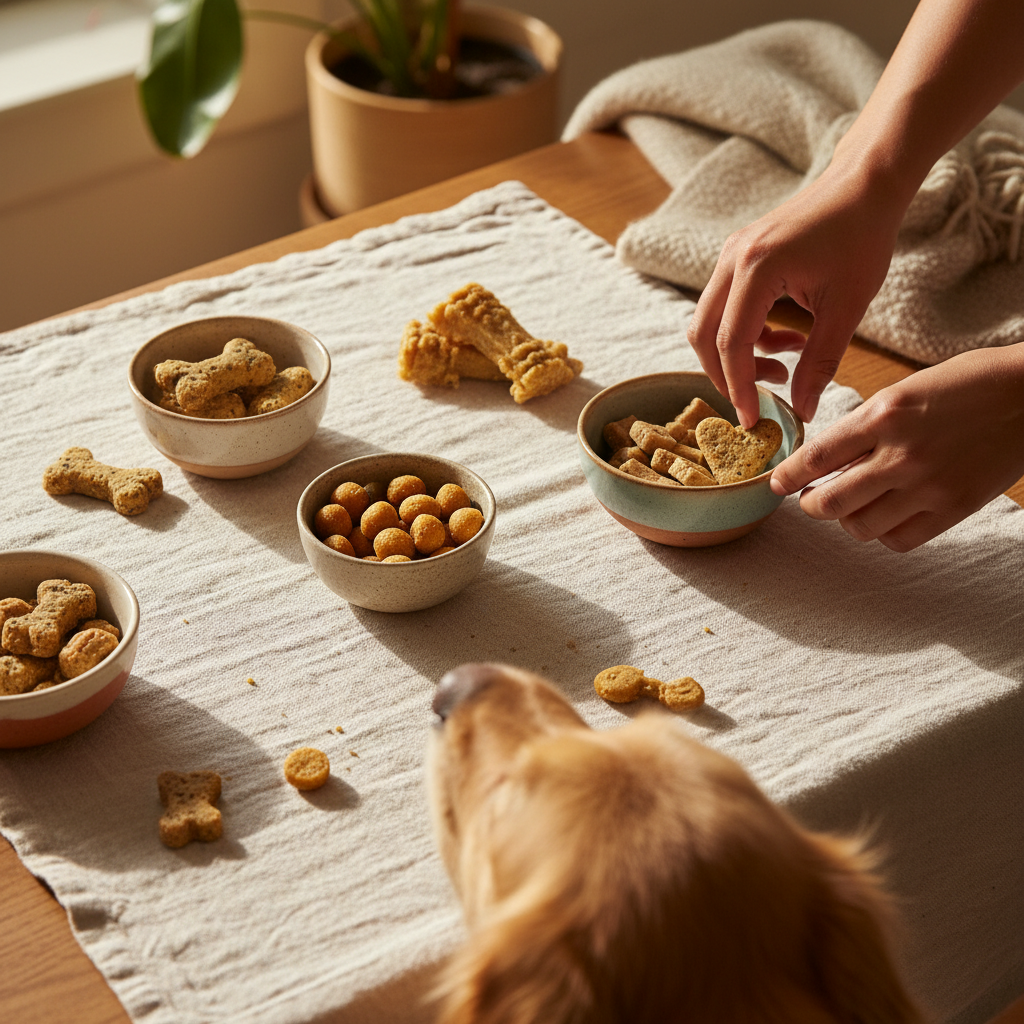
Before you teach puppy leave it command protocols, you must establish a clear reward hierarchy. This system ensures your puppy understands that choosing to ignore a distraction is always the more profitable option. Success depends entirely on the contrast between your low value bait and your high value payment.
For the bait, choose something relatively unexciting, such as a single piece of standard dry kibble. This represents the distraction they must bypass. For the reward, you need something irresistible. In our complete online puppy training course, we recommend using tiny morsels of boiled chicken or premium Australian beef liver. These high value treats act as the paycheck for their impulse control; they must be significantly more enticing than the bait to motivate a change in behavior.
Crucially, you must never reward your puppy with the specific item you just told them to leave. This is a common mistake that undermines the entire lesson. If you tell a puppy to leave a piece of kibble and then give it to them as a reward, you are teaching them that leave it simply means wait a few seconds. The bait must remain off limits. The reward always comes from your other hand, reinforcing the concept that looking away from the distraction is the only way to earn the superior prize.
Step 1: The Hidden Treat Method
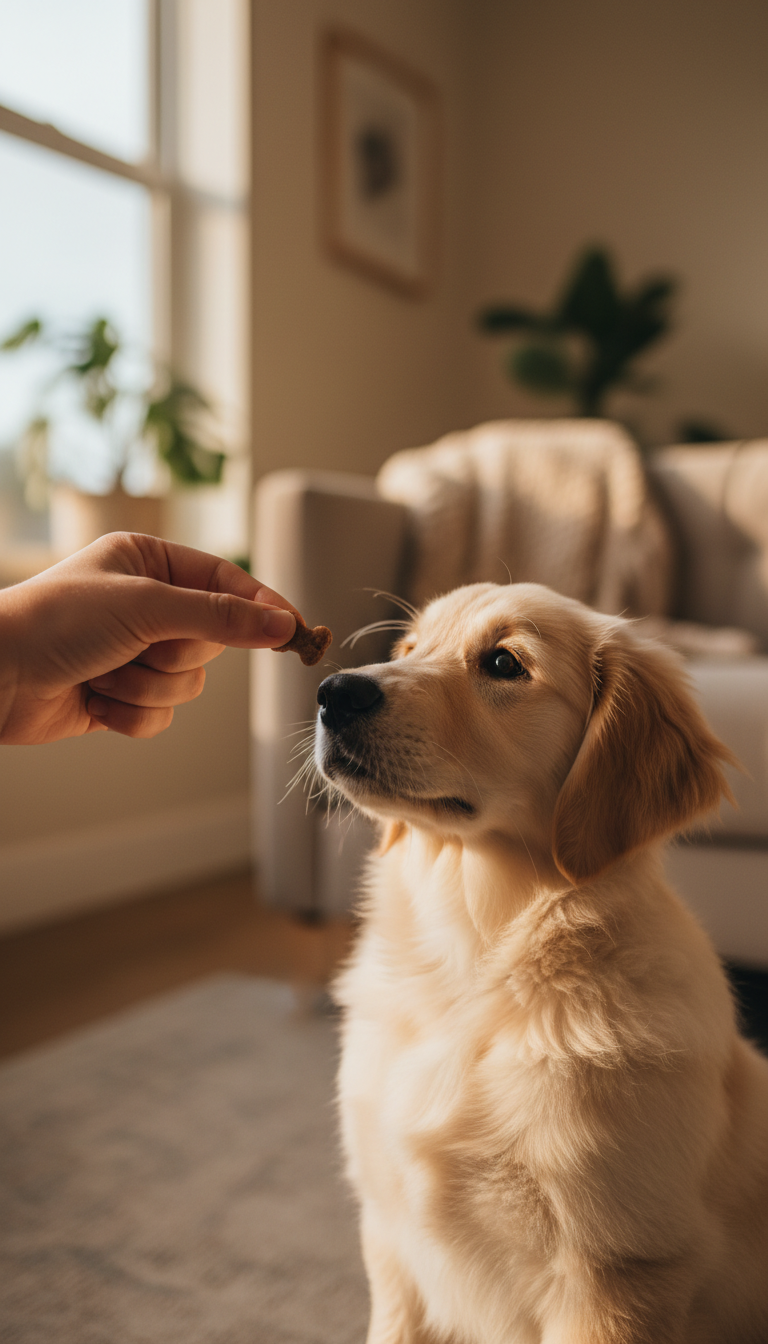
With your treats prepared, find a quiet spot in your home to begin the first practical exercise. Place a piece of low value kibble in one hand and close your fist tightly; keep your high value rewards hidden in your other hand, ideally behind your back or in a treat pouch. Present the closed fist to your puppy at their nose level.
Your puppy will likely sniff, lick, or even paw at your hand to reach the food. Remain completely still and silent. You are waiting for the exact moment your puppy realizes that pestering your hand is unsuccessful. As soon as they pull their nose back or look away, mark the behavior by saying a crisp "Yes!" This technique is known as capturing the choice. By marking the split second they decide to disengage, you are reinforcing the internal decision to ignore a distraction rather than simply waiting for a command.
Timing is critical when you teach puppy leave it command basics. The marker word must bridge the gap between the correct action and the reward. Once you mark with "Yes!", immediately deliver the high value treat from your other hand. Our complete online puppy training course highlights that this clear separation prevents your puppy from trying to snatch the bait. Repeat this process until your puppy looks at your closed fist and immediately chooses to sit back or look at you rather than investigating your hand.
Step 2: Transitioning to the Open Palm
Once your dog consistently disengages from a closed fist, it is time to increase the challenge by adding visual temptation. Place the low value kibble in your palm and slowly present it with your hand fully open. This stage requires higher concentration because the puppy can now see the prize they are being asked to ignore. If your puppy lunges or tries to snatch the food, simply close your hand into a fist immediately. Do not pull your arm away; just remove access to the treat.
As you continue to teach puppy leave it command skills, use the verbal cue just as you present the open palm. You are looking for the puppy to make a conscious decision to look away from the visible food. The moment they offer eye contact or move their head away, mark the behavior with a "Yes!" and provide a high value reward from your other hand. This progression, featured in our complete online puppy training course, ensures your dog understands that ignoring a visible distraction leads to a far better outcome than trying to take it. Repeat this until the puppy remains calm even with the kibble in plain sight.
Step 3: Taking Training to the Floor
The floor is the ultimate testing ground because it mimics the real world 'street treats' your dog encounters daily, such as dropped snacks at a park or wildlife remains on a footpath. To begin, place a low value treat on the ground while you are in a crouched position. If your puppy lunges, immediately cover the food with your hand or foot. You are not scolding them; you are simply making the 'wrong' choice impossible to complete.
A unique tip we recommend in our complete online puppy training course is to use a leash even while indoors for this stage. This provides a physical safety net that prevents your puppy from 'self rewarding' if they are faster than your hand. By keeping the leash taut enough to stop them from reaching the bait, you ensure they only experience success when they choose to disengage.
As your dog becomes reliable, progress to a standing position. Standing increases the difficulty because you are further away from the bait. When you teach puppy leave it command variations at this level, wait for the puppy to look up at you despite the tempting morsel at your feet. Mark this moment with a 'Yes!' and deliver a high value reward from your pouch, reinforcing that looking away from floor level distractions is always the most profitable decision.
Real World Practice: Leave It in the Australian Backyard
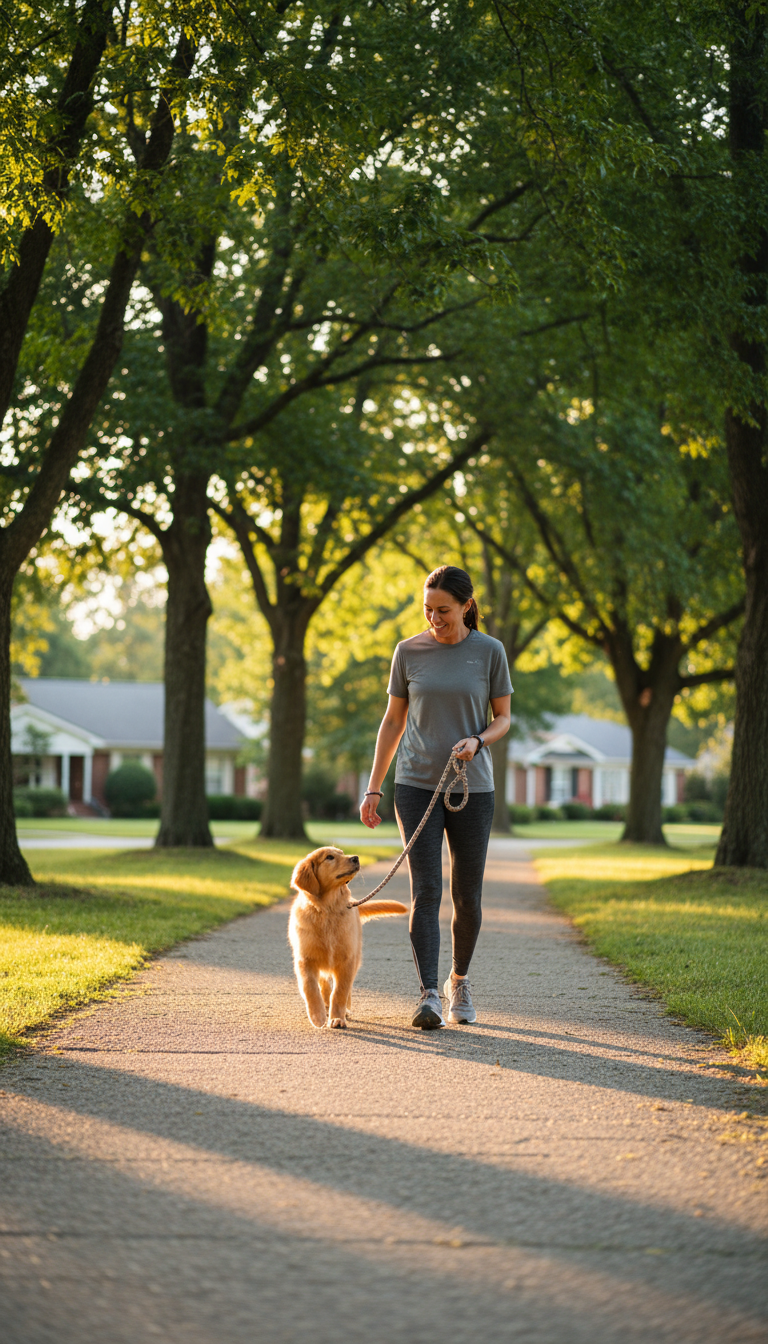
Transitioning from the controlled environment of your lounge room to the Australian outdoors introduces a new layer of complexity. The backyard presents a sensory overload of shifting shadows from gum trees, the sudden chatter of a kookaburra, or the enticing scent of a neighbor's compost. These distractions are far more compelling than a piece of kibble on the floor, making this stage vital for real world reliability.
When you teach puppy leave it command protocols in an open space, always use a loose lead. The lead acts as a safety net, preventing the puppy from reaching a hazard while allowing them the freedom to make their own choices. If your puppy fixates on a smelly scrap on the footpath, issue the command once. The goal is for them to voluntarily disengage and offer eye contact. Reward this decision immediately with a premium treat to reinforce that checking in with you is more rewarding than scavenging.
To truly level up their training, introduce motion. Moving objects often trigger a puppy's instinctual prey drive. Have a family member roll a ball nearby or jog past while you practice the cue. Mastering the ability to ignore moving targets is a key milestone in our complete online puppy training course, ensuring your dog remains focused even amidst the chaos of a busy park or a bustling suburban street.
Common Training Mistakes and Troubleshooting
If your puppy is struggling as you teach puppy leave it command sequences, the issue often lies in the reward hierarchy. A common error is using treats that are too similar in value. If the bait is just as enticing as the payment, your puppy has no logical reason to disengage. Ensure your reward is significantly higher in value, such as fresh Australian beef versus standard dry kibble.
Environmental distractions also cause frequent setbacks. Attempting this in a park before mastering it in a quiet hallway is a recipe for frustration. If your puppy fails three times in a row, you must "split" the task. This means breaking the goal into smaller, achievable steps. For example, if they cannot leave a treat on the floor, return to the open palm method at waist height to rebuild their confidence.
Your tone of voice is equally critical. Using an angry or intimidating voice can cause a puppy to shut down or focus on your frustration rather than the learning objective. Keep cues neutral and encouraging. For personalized support with behavioral roadblocks, contact our training experts or revisit the troubleshooting modules in our complete online puppy training course.