To teach puppy to come when called, begin in a quiet area with minimal distractions using high-value rewards and positive reinforcement. Consistently pair a specific verbal cue with praise as they move toward you; eventually increase the distance and environmental challenges as they improve. This method builds a reliable recall by making returning to you the most rewarding choice for your pet.
Imagine calling your puppy's name at the park, only to watch them bolt in the opposite direction toward a distraction. This scenario is a common source of anxiety for many owners, yet a reliable recall is the most critical safety skill your dog can possess. It represents the difference between a stressful walk and a confident, off-leash adventure. In this guide, we provide a professional framework to transform your puppy’s selective hearing into a consistent response. You will learn how to build foundational name recognition through focused games, transition your training from the quiet lounge room to the high-stakes outdoors, and implement the long lead method for public spaces. We also cover essential emergency cues and strategies for navigating the challenging adolescent phase. By identifying and avoiding common training mistakes, you will ensure your puppy returns to your side every single time you call.
Why a Reliable Recall is Every Aussie Puppy Owner's Top Priority
In the vast landscapes of Australia, from coastal suburbs to the rural outback, the ability to teach puppy to come when called is more than a convenience; it is a fundamental safety requirement. While basic commands like sit or shake are enjoyable, a reliable recall serves as a life-saving behavior that protects your dog from unique Australian hazards.
Consider a walk through long grass where a brown snake might be lurking, or a scenario where a gate is accidentally left open near a busy suburban road. In these high-stakes moments, having a dog that returns immediately can prevent tragedy. Even at the local off-leash park, a solid recall allows you to steer your puppy away from potentially aggressive interactions or over-excitement before a situation escalates. It is the difference between a controlled outing and a dangerous emergency.
At Online Puppy School, we recognize that traditional in-person classes do not always fit into a busy Australian lifestyle. Our complete online training course for puppies is designed to provide the expertise and flexibility needed to train in your own environment at your own pace. By mastering this skill through a structured curriculum, you ensure that your puppy views returning to you as the most rewarding choice they can make, regardless of the distractions around them. If you find your puppy is particularly distracted during these early stages, you can always contact our team for specific professional advice.
Step 1: Building Name Recognition and the Follow Me Game

Before you can expect your dog to race back from a distance, you must ensure they understand that their name is the most exciting sound in the world. At this stage, your puppy's name acts as a focus signal rather than a full command to return. To begin, find a quiet area of your home with zero distractions to ensure your puppy can succeed from the very first repetition.
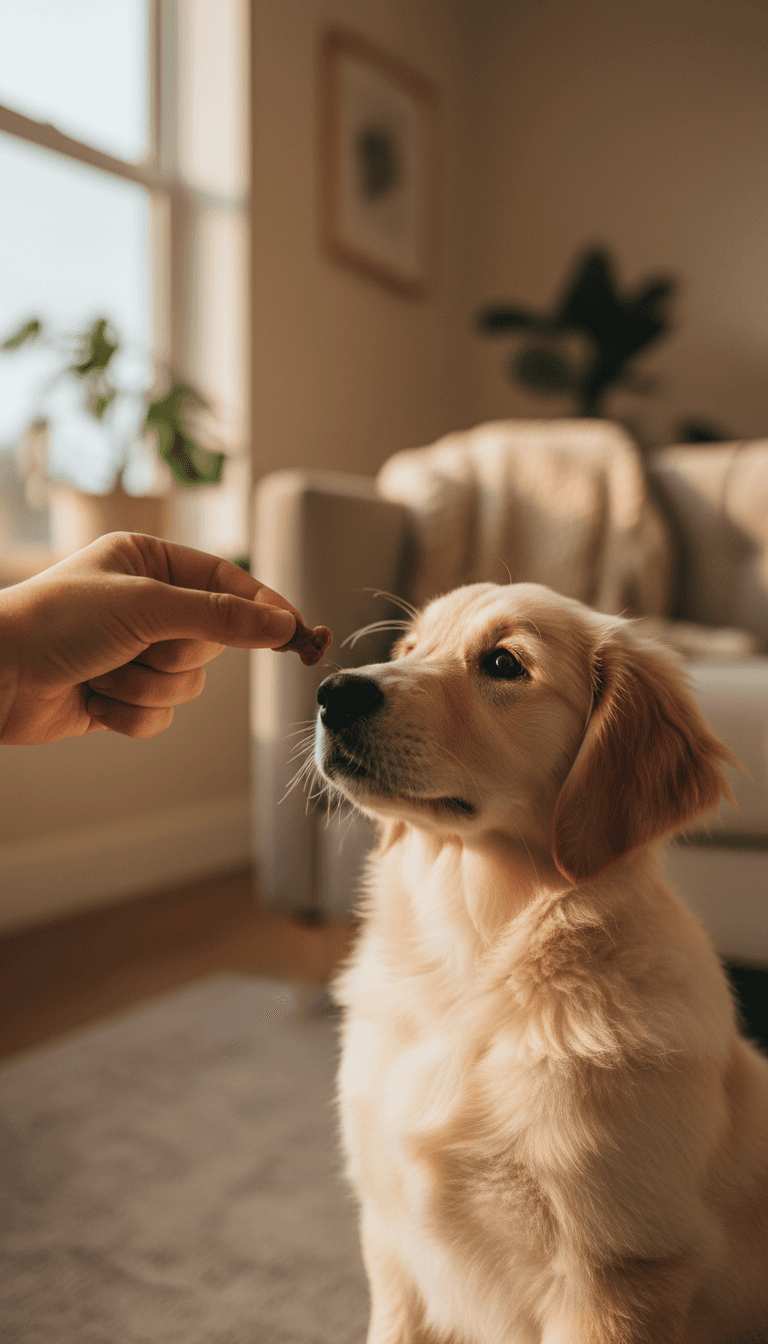
Start by dropping a small piece of food at your feet. While your puppy is busy eating, walk a few paces away. Once they finish the treat, call their name clearly. The moment they turn their head toward you, mark the behaviour immediately with an enthusiastic 'Yes!' or a clicker. When they reach you, provide a heavy reward of three or four treats in a row at your feet. Repeating this 'Follow Me' game builds a powerful association between their name and the physical act of moving toward you.
As you begin to teach puppy to come when called, the quality of your rewards is paramount. While dry kibble works for daily meals, it often lacks the high stakes motivation needed for foundational recall. Use high value treats such as tiny pieces of poached chicken or small cubes of cheese. These rewards ensure the puppy prioritises your voice over their environment. If you find your puppy is struggling to focus even in a quiet room, you can contact our team for tailored advice. Building this initial name recognition is a core component as you complete online training course for puppies and prepare for the transition to outdoor distractions.
Moving Training from the Lounge Room to the Backyard
Transitioning from the quiet lounge room to the backyard is a significant step when you teach puppy to come when called. Outside, even a familiar lawn presents new smells and moving insects that compete for your puppy’s attention. To manage this transition effectively, we recommend the Ping Pong Recall game. This exercise requires two people standing roughly five meters apart in an open area. Taking turns, each person calls the puppy using their name followed by the recall cue. When the puppy reaches the caller, they should receive a high value reward and plenty of praise before the second person calls them back across the yard.
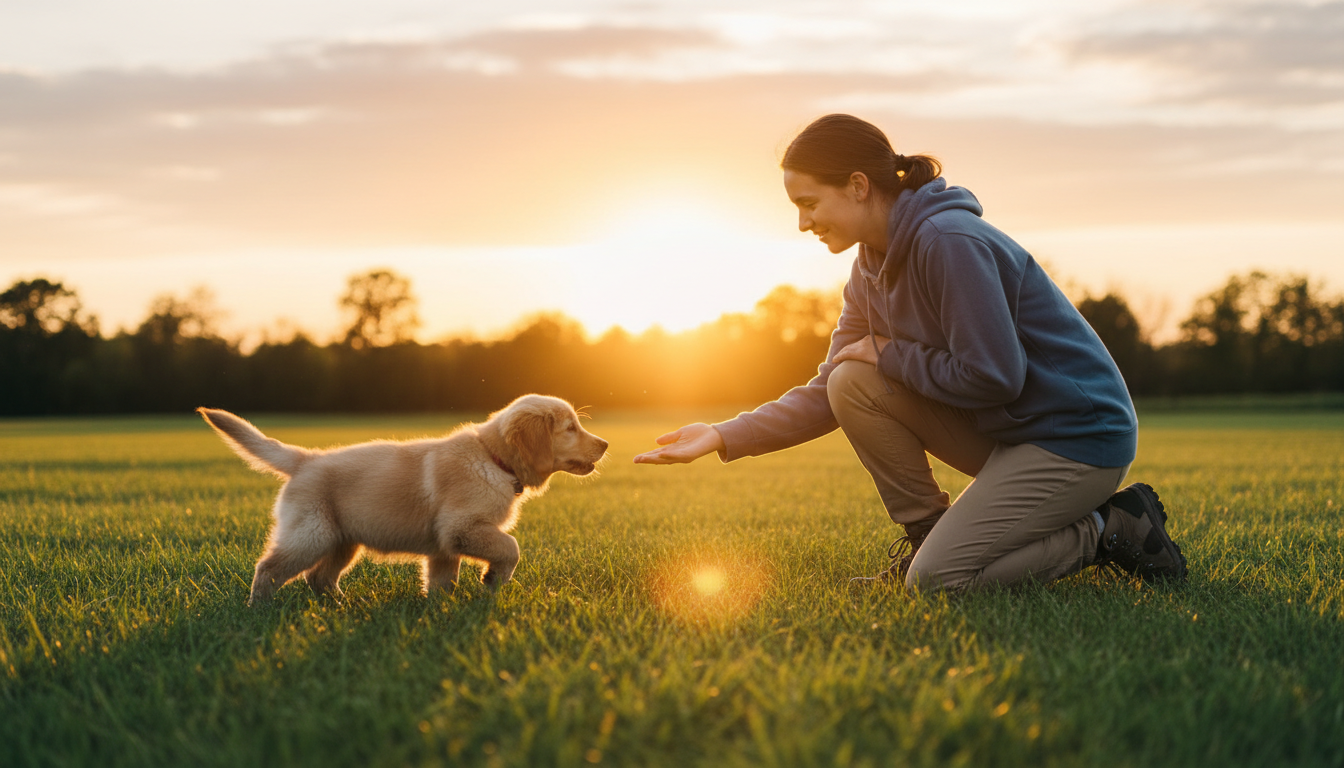
Your physical presence heavily influences your puppy's desire to return. To make yourself more inviting, crouch down to their level and open your arms wide. This posture is less intimidating and more engaging than standing tall. Use a high pitched, excited tone of voice; puppies are naturally drawn to sounds that mimic the energy of play. If you need more structured drills for outdoor success, our complete online training course for puppies offers step by step video demonstrations.
If your puppy becomes distracted by a blowing leaf or a new scent, avoid the temptation to repeat the command. Repeating the cue teaches your puppy that the first three times you speak are optional, a phenomenon known as command poisoning. Instead, if they do not respond immediately, move further away or make more noise by clapping to regain their focus. If you find your puppy is consistently choosing the environment over you, contact our team to help troubleshoot your technique. This stage ensures the recall remains a fun, high stakes game before moving into more challenging public spaces.
The Long Lead Method: Training Recall in Public Spaces
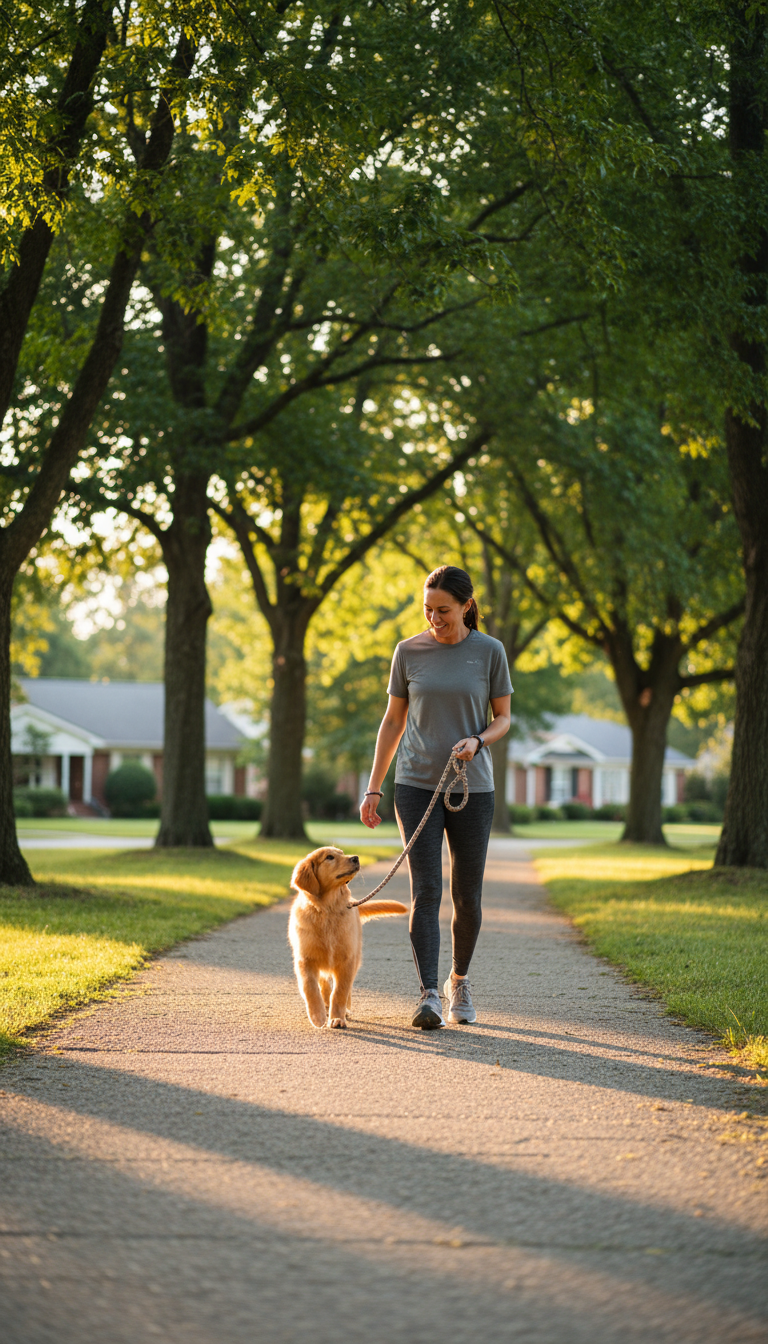
Once your puppy is consistently responding to the Ping Pong game in the safety of your backyard, it is time to bridge the gap between home and the local park. This transition introduces a vast array of new stimuli, from the scent of other dogs to the movement of distant joggers. To manage this safely, you must utilize a five to ten meter long lead. It is important to avoid retractable leads for this exercise; the constant tension on a retractable line teaches a puppy to pull against the collar and provides significantly less control in an unpredictable public setting.
Find an open, unfenced area and allow your puppy to explore at the end of the long lead. Once they are engaged with a scent or a patch of grass, call their name followed by your recall cue. If your puppy ignores you, do not repeat the command. Instead, use the lead to gently guide them toward you, taking up the slack until they turn and begin moving in your direction. The moment they arrive, reward them generously. This physical guidance prevents the puppy from learning that they can simply tune you out when they are busy sniffing.
Safety is the priority during this phase of training. A puppy should never be off-lead in an unfenced public area until their recall is at least 80 to 90 percent reliable on the long line. When your puppy makes a difficult choice, such as turning away from another dog or a tempting distraction to return to you, use a "jackpot" reward. This involves delivering five to ten high value treats in rapid succession, one after the other. This overwhelming positive reinforcement signals that choosing you over a major distraction is the most profitable decision they can make. If you are struggling with the transition to public spaces, our complete online training course for puppies provides detailed video modules on lead handling, or you can contact our team for personalized troubleshooting.
How to Teach an Emergency Recall Cue
While the long lead method builds a solid foundation to teach puppy to come when called in public, you also need a distinct "emergency brake" for high stakes moments. An emergency recall is a specialized cue reserved for life threatening situations, such as your dog bolting toward a road or approaching a dangerous animal. Unlike your standard "come" cue, which suggests your puppy should return to you for a routine interaction, the emergency cue means they must stop everything and run to you immediately with 100 percent urgency.
Choose a high intensity word that you do not use in daily conversation, such as "TOUCH" or a loud, distinct whistle. To maintain the power of this command, you should only practice it once or twice a week. Every single time you use this cue during training, you must provide a jackpot of the highest value food imaginable. We recommend using small pieces of cooked steak, sardines, or roast duck. This is not the time for kibble or standard store bought treats.
When practicing, wait for a moment when your puppy is relatively calm, give the cue in an urgent tone, and when they reach you, deliver a massive reward for at least thirty seconds. This creates a reflexive response where the sound itself triggers an immediate turn. For more advanced safety drills, you can explore our complete online training course for puppies or contact our team for help refining your emergency cues.
Handling the Adolescent Phase and Stubborn Puppies
Just as your training feels solidified, you may encounter the adolescent phase. Between six and ten months of age, many puppies enter a flight period where they appear to have forgotten how to teach puppy to come when called entirely. This regression is a normal developmental stage where hormones and brain restructuring make the environment far more stimulating than your voice. It is not a sign of a naturally stubborn puppy; it is a signal that you must temporarily lower your expectations and return to foundations.
During this stage, re-attach the long lead for all public outings to prevent them from practicing the act of ignoring you. You should also audit the value of your reinforcements. If you were using standard biscuits, upgrade to something irresistible like warm roast chicken or liver treats. If you find yourself frustrated by a perceived lack of progress, our complete online training course for puppies provides specific strategies for the teenage months, or you can contact our team for a professional progress review.
Before labeling a dog as stubborn, use the following checklist to troubleshoot their lack of response:
Assessment Area | Diagnostic Question |
|---|---|
Reward Value | Is the food offered more exciting than the environment? |
Difficulty Level | Is the current environment too busy for their skill level? |
Negative Association | Do you only call them when the fun is ending, such as leaving the park? |
Physical State | Is the puppy over-tired or currently over-stimulated by other dogs? |
5 Common Mistakes That Ruin Your Puppy's Recall

Even when you understand the developmental hurdles of adolescence, specific owner habits can accidentally devalue your hard work. To successfully teach puppy to come when called, avoid these five common pitfalls.
1. Calling for unpleasantries: Using your recall cue for bath time, nail clips, or medication creates a negative association. Puppy School Fix: Physically go to your puppy and lead them by the collar for chores. Keep the recall cue strictly for positive outcomes.
2. The "end of the walk" signal: If you only call your puppy to put the lead on and go home, they learn that coming to you ends the fun. Puppy School Fix: Practice frequent "check-ins" at the park. Call them, reward them with a treat, and immediately release them back to play.
3. Reprimanding a slow return: Scolding a puppy for taking too long to return effectively punishes the act of coming back. Puppy School Fix: Be the most exciting thing in your puppy’s world when they arrive. Praise them enthusiastically, regardless of how long the return took.
4. Chasing the puppy: Running after a puppy when they have a stolen item turns your recall into a game of keep-away. Puppy School Fix: Turn and run in the opposite direction. This triggers their natural instinct to follow you.
5. Command repetition: Saying "come" repeatedly teaches your dog that the first several cues are optional. Puppy School Fix: Say the cue once. If they ignore it, use a clap or a whistle to regain focus without "poisoning" the command.
For comprehensive support through every developmental milestone, you can contact our team or explore the modules in our complete online training course for puppies.