The best way to teach puppy to settle on a mat is to use positive reinforcement to reward your dog for stepping onto and lying down on a specific spot. Gradually increasing the duration of the stay rewards calm behavior and creates a reliable boundary that manages door manners while preventing mischief.
Every puppy owner knows the frustration of a dog that simply cannot switch off, whether you are trying to cook dinner or enjoy a quiet moment on the sofa. This constant movement often leads to overstimulation and exhaustion for both you and your pet. Mat training is the most effective way to bridge the gap between chaotic play and intentional relaxation; it gives your puppy a designated safe space where they understand exactly what is expected of them. By mastering this skill, you create a portable sanctuary that works as well in your living room as it does at a bustling Australian cafe. This guide provides a professional roadmap to achieving calmness. We will cover building positive associations, layering in duration, and proofing the behavior against real world distractions so you can finally enjoy a settled, well-behaved companion.
Why Mat Training is the Secret to a Relaxed Australian Household
Teaching your puppy to "station" on a mat is more than just a party trick; it is a foundational skill for a peaceful home. While many owners are familiar with a standard stay, which is a physical position often held under tension, the goal here is to teach puppy to settle on a mat. This shift in focus targets the puppy’s emotional state rather than just their body. A settle implies a relaxed posture, a lowered chin, and a calm mind, signaling to the dog that their current job is simply to exist quietly.
In Australia, our lifestyle often involves social outings where a well behaved dog is a prerequisite. By mastering this skill, you can enjoy a morning coffee at your local cafe without your puppy lunging at passers-by or tangling their lead around table legs. It transforms hectic moments, such as guests arriving at the front door or the family sitting down for dinner, into periods of predictable calm. Instead of the dog being underfoot or scavenging for dropped food, they have a designated station where they feel secure and relaxed.
The mat acts as a portable safe space. Because it is a familiar object with a strong history of reinforcement, it provides a sense of certainty in new or high pressure environments. If you are visiting friends or traveling, unrolling the mat tells your puppy exactly where they belong and that it is time to switch off. This concept is a core component of our complete online puppy training course, as it builds the focus and impulse control necessary for a successful life together.
What You Need to Get Started
Before you begin to teach puppy to settle on a mat, you must select the right tools for the job. While many Australian owners head straight to Kmart or a local pet store for a specific training mat, the brand is less important than its physical characteristics. Choose a mat that is portable and lightweight, but most importantly, ensure it has a distinct texture. It should feel different under their paws compared to their plush evening bed or the lounge room carpet. This tactile difference helps your puppy quickly identify that when this specific surface appears, it is time for a "settle" rather than just a nap.
Prepare a pouch of high value treats, such as small pieces of boiled chicken or freeze dried liver, which are far more motivating than standard kibble. For your initial sessions, find a quiet area of your home with minimal foot traffic. Success in our complete online puppy training course often hinges on these early environmental setups. By removing distractions, you allow your puppy to focus entirely on the new surface you are about to introduce.
Phase 1: Building a Positive Association with the Mat
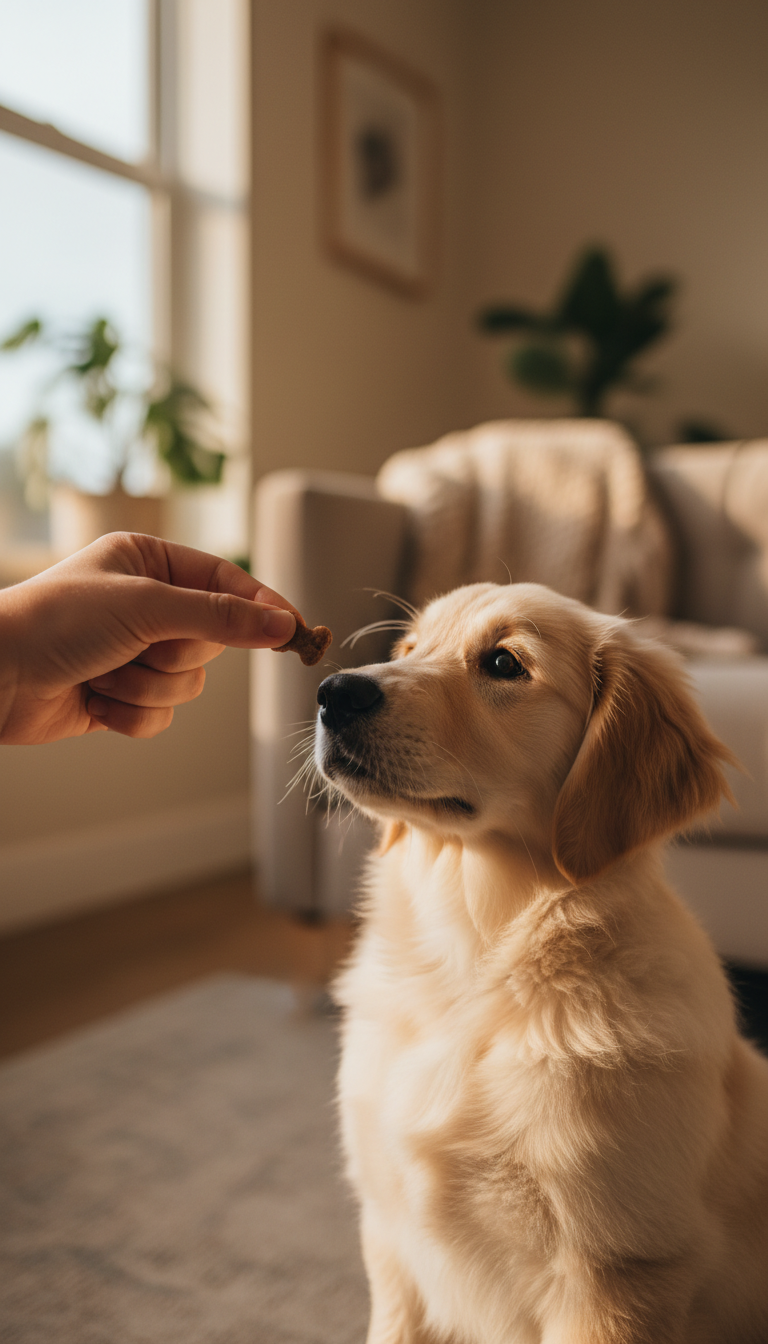
Once you have your mat and a pouch of high value treats, you are ready to begin. The first phase focuses on building a powerful, positive association. We want your puppy to view the mat as a magnet for rewards. At this stage, do not use a verbal cue or command. We are using a technique called shaping, where we reward small steps toward a final goal without giving the dog explicit instructions. This encourages your puppy to think and problem solve, which often leads to deeper learning.
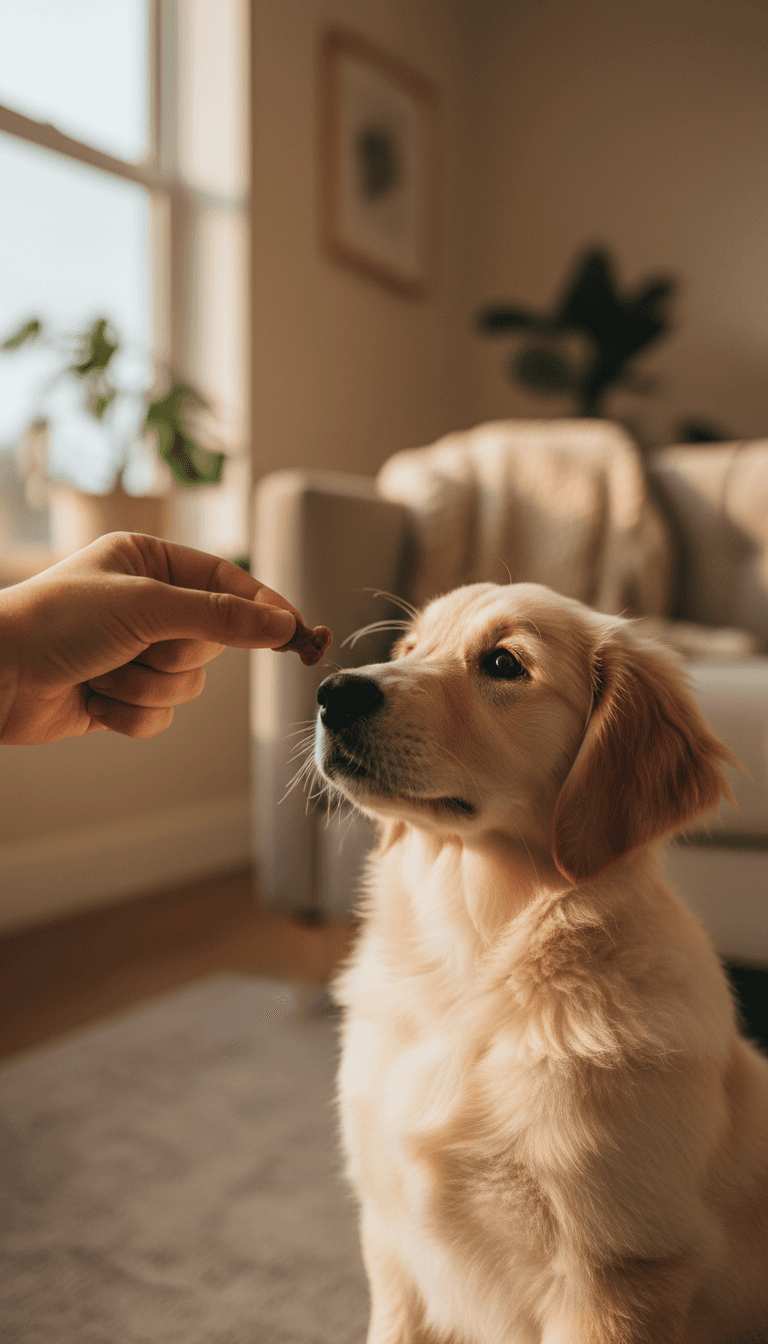
Place the mat on the floor and stand quietly nearby. Your puppy will naturally be curious about the new object. As soon as they look at the mat, sniff it, or place a single paw on it, drop a treat directly onto the mat. It is vital to reward the mat itself rather than feeding from your hand. This ensures the puppy perceives the surface, not you, as the source of the good things. If they move away, simply wait. Most puppies will return to the mat to see if more treats appear. When they do, reward them immediately.
By capturing these voluntary movements, you are building a strong history of reinforcement. The goal is for the puppy to choose to stay on the mat because it is the most rewarding place in the room. If you find your puppy is struggling to engage or seems distracted, you can contact our training team for personalized troubleshooting. Keep this first session brief, ideally under five minutes, to ensure your puppy finishes while they are still successful. This foundational work is a core element of our complete online puppy training course, setting the stage for more advanced settling in the next phase.
Phase 2: Adding the Down and Settle Cue
Now that your puppy is enthusiastically seeking out the mat, it is time to refine the behaviour from a simple interaction to a relaxed "drop." Wait for your puppy to step onto the mat as they have been doing. Once they are there, you can use a hand lure or a known command to ask for a "down" or "drop." In our complete online puppy training course, we emphasize that the physical shift from standing to lying down is the first step toward true relaxation.
The way you deliver the reward at this stage is critical to your success when you teach puppy to settle on a mat. Instead of handing the treat to your puppy from your waist height, place the treat directly onto the mat between their front paws. This placement is intentional. It encourages the puppy to keep their head down and their weight shifted back, rather than looking up at your hands for the next piece of food. Low head carriage is a physical precursor to a calm emotional state. If your puppy struggles to stay down or keeps popping up to reach your hand, you may need to adjust your timing; feel free to contact our training team for advice on your luring technique.
Only when your puppy is consistently lying down as soon as they reach the mat should you introduce your verbal cue, such as "settle" or "on your mat." Say the word just as the puppy’s belly touches the material. By pairing the word with the completed action, you help them categorize the behaviour. You are no longer just rewarding a trick; you are labelling a specific state of being. Keep your voice calm and low. A high pitched, excited tone can accidentally overstimulate your puppy, defeating the purpose of a settle exercise.
Phase 3: Increasing Duration and Distance
Many owners find that their puppy treats the mat like a drive-through, popping up the second the treat is swallowed. To fix this, you must build duration by gradually increasing the time between rewards. Start by delivering treats every two seconds while they remain in a drop. If they stay settled, stretch the interval to five seconds, then ten seconds. This phase is essential to teach puppy to settle on a mat for longer periods, transitioning the behaviour from a quick trick into a reliable lifestyle skill.
Crucially, you must use a release word such as "okay" or "break" to signal the end of the exercise. Without a clear release, your puppy will decide for themselves when they are finished, which undermines the concept of a stay. Only when they hear the release word should they be allowed to stand up and leave the mat. Always say the release word before they have a chance to move on their own.
Once your puppy is stable for thirty seconds, begin adding distance. Step back by only 30cm at a time, then immediately return to reward them between their paws. If they break position, you have moved too far too fast. This systematic approach is a key part of our complete online puppy training course. If your puppy struggles with the distance, contact our training team for specific adjustments to your training environment.
How to Proof the Settle for Cafes and Visitors
Once your puppy is reliable with distance and duration in a quiet room, you must begin proofing the behaviour against real world distractions. Start by moving the mat to the kitchen to teach puppy to settle on a mat while you prepare a meal. The smell of food provides a natural challenge to their focus. If they break position to scavenge, simply reset and reward more frequently for a few minutes. This controlled environment reinforces that the mat is the only place where rewards happen, even when dinner is being served.
Next, transition the mat near the front door. This is a critical step for developing polite door manners. By teaching your puppy that visitors arriving means they should go to their mat, you replace the impulse to jump or bark with a calm, stationary job. For owners following our complete online puppy training course, this is often where the benefits of stationing become most apparent in daily life.
The final stage involves taking the mat to a local Australian cafe or park, which is the ultimate way to teach a puppy to stay quietly by your side. In these high stimulation environments, the mat serves as a familiar island in a sea of unpredictable smells and sights. It provides a consistent tactile cue that helps your puppy ignore passing dogs or falling crumbs. If the environment proves too overwhelming, you can contact our training team for strategies on managing high arousal in public settings.
Troubleshooting: What to Do if Your Puppy Won't Settle
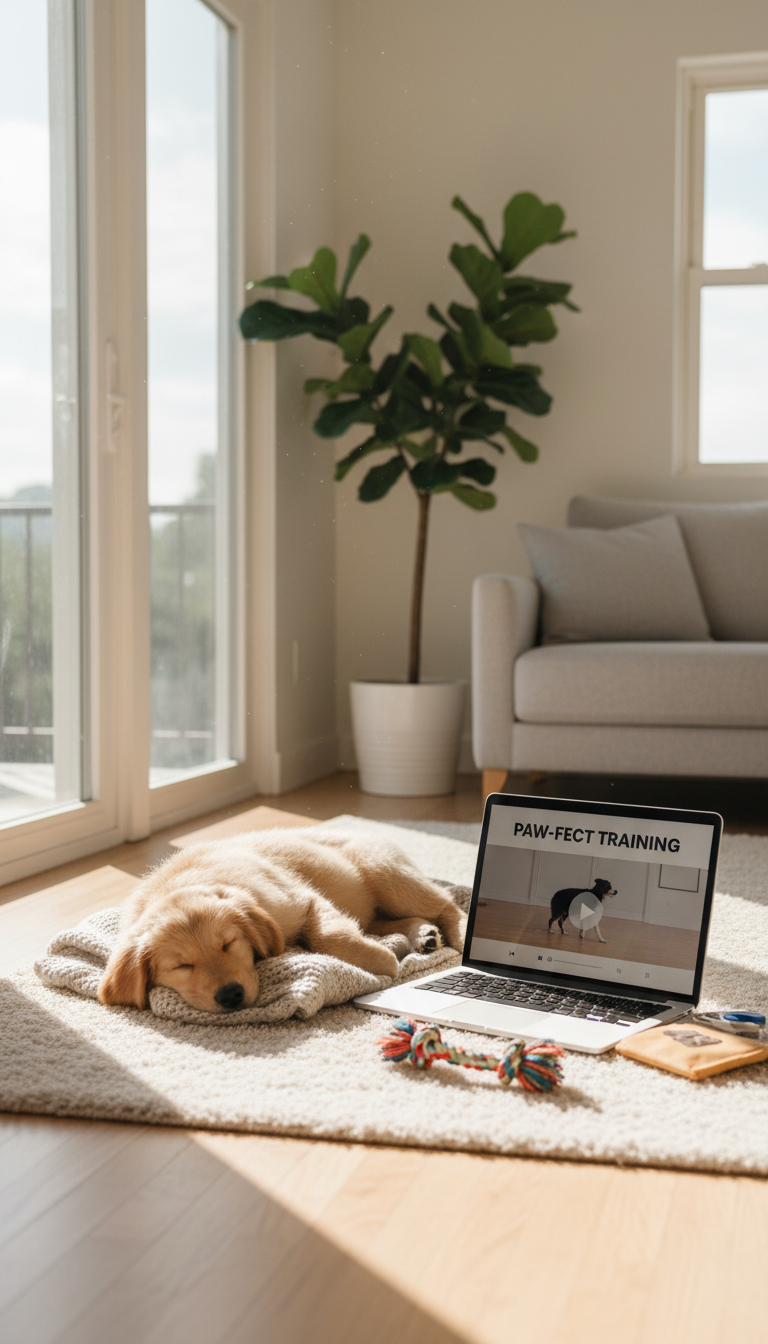
Even with the best preparation, young dogs often find it difficult to switch off. If your puppy treats the mat like a trampoline rather than a bed, they may be over-aroused by the training process or the treats themselves. In these cases, provide a long lasting chew or a stuffed Kong once they lie down. Licking and chewing are naturally calming behaviours that lower a dog's heart rate and help them transition into a relaxed state. This technique is particularly helpful for high energy breeds that struggle with the transition from play to rest.
If your puppy constantly walks away from the mat, you likely have a gap in your reinforcement schedule. You should temporarily increase the frequency of treats to keep them engaged. Delivering a small piece of food every two seconds prevents them from looking for entertainment elsewhere. If they continue to wander, the environment may be too distracting or the session may simply be too long.
Learning to be still requires significant mental self-regulation. For a young puppy, this is exhausting work. Keep your training sessions under five minutes to prevent mental fatigue. If you hit a plateau or notice your puppy becoming frustrated, contact our training team for personalized adjustments. Building these habits correctly from the start is a core focus of our complete online puppy training course, ensuring your dog remains a calm companion for years to come.