To stop puppy jumping up on people, you should immediately turn your back and ignore the behavior until all four paws are on the floor. Only offer praise, treats, or attention once the puppy is calm and settled; this reinforces that polite behavior is the only way to get your focus.
Coming home to an overexcited puppy often feels like a warm welcome until those sharp claws catch your work clothes or a visitor is nearly knocked over at the front door. While this jumping is a natural expression of canine joy, it quickly evolves from a cute habit into a frustrating behavioral challenge that compromises both safety and social etiquette. At Online Puppy School, we view calm greeting manners as a fundamental pillar of early socialization. In this comprehensive guide, we provide the specific, practical strategies needed to curb this impulse effectively. You will learn the essential Four Paws on the Floor rule, management techniques for the front door, and how to redirect that frantic energy into a reliable sit. By the end, you will have a clear roadmap to transform chaotic greetings into controlled interactions both at home and in public.
Why Puppies Jump Up: Understanding the Greeting Instinct
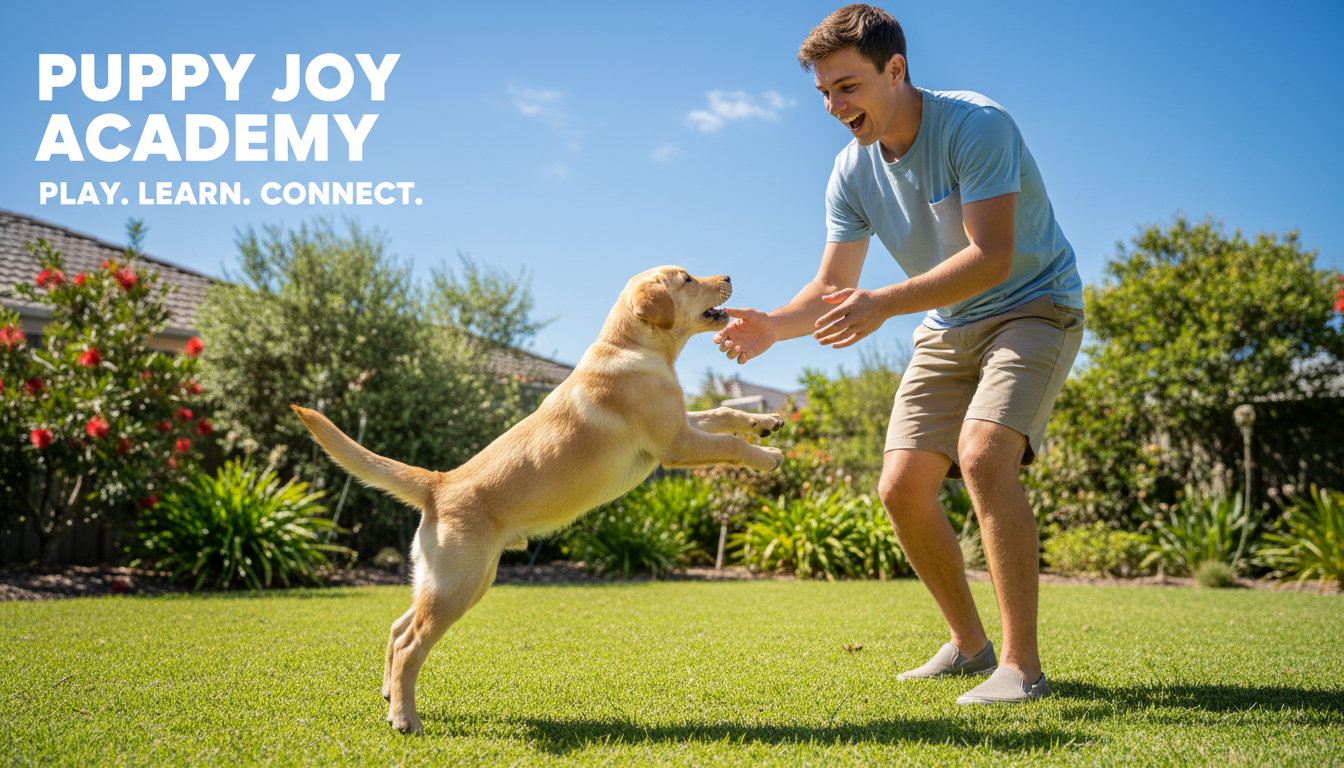
To successfully stop puppy jumping up on people, we must first recognize that this behavior is a natural canine greeting. In a litter, puppies communicate face-to-face. They lick their mother’s muzzle and nudge their siblings to gather information and bond. Because humans are significantly taller than their canine companions, a puppy must leap upward to reach your face and engage in what they consider a polite hello.
While this behavior is often perceived as endearing when a puppy is eight weeks old, it quickly becomes a significant problem by the six-month mark. A ten-kilogram dog launching themselves at a guest is no longer cute; it is a safety risk and a source of genuine frustration for owners. It is helpful to differentiate between two distinct types of jumping. Attention-seeking jumping is a conscious attempt to get you to react, talk, or touch. Conversely, over-arousal jumping occurs when a puppy is so overstimulated that they lose physical impulse control. They are not trying to be naughty; their brains are simply moving faster than their bodies can manage. Acknowledging that this is an instinctual drive, rather than a lack of respect, is the first step toward effective management through a structured online puppy training course.
The Golden Rule: Four Paws on the Floor
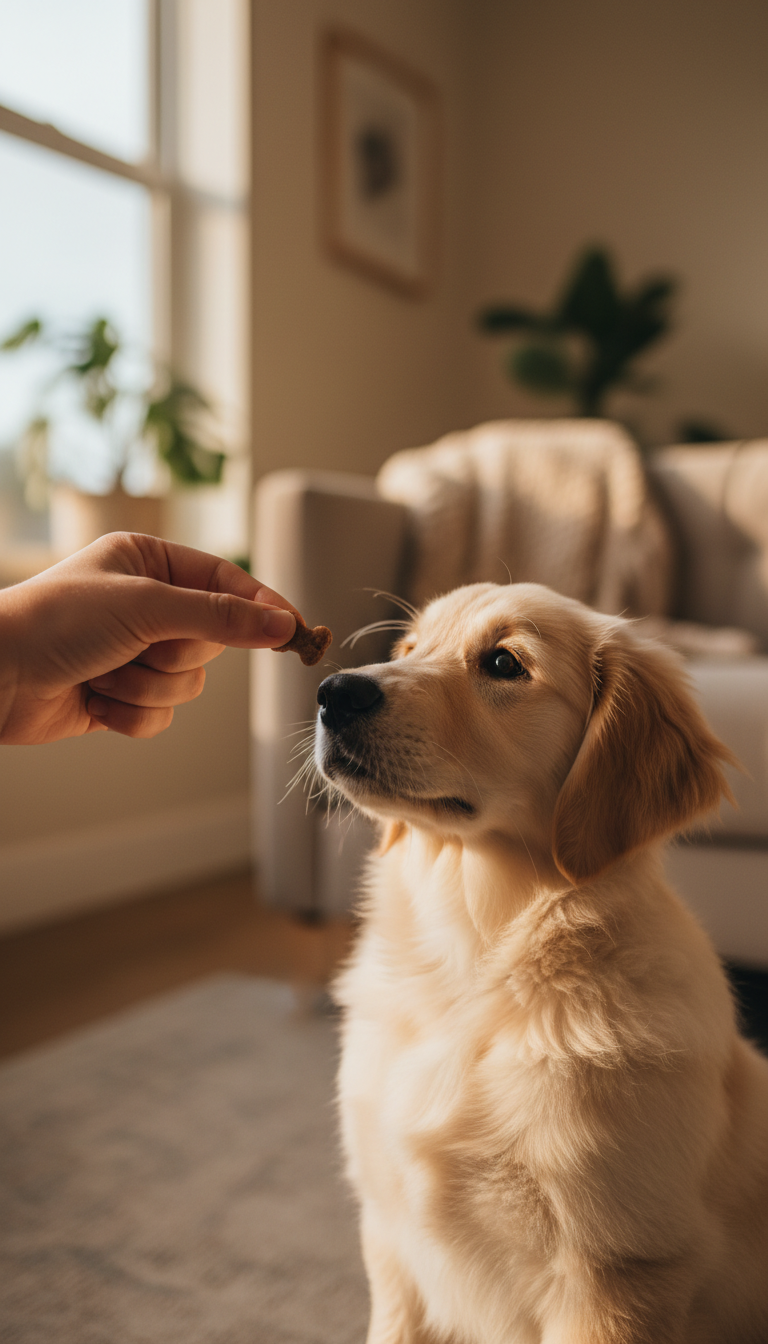
To effectively stop puppy jumping up on people, you must implement the "Four Paws on the Floor" rule. This concept establishes that attention, eye contact, and touch are rewards only granted when your puppy is grounded. Many owners instinctively push a jumping puppy away or sternly say "no," but these responses are often counterproductive. To a high-energy puppy, a push feels like a playful wrestle, and a vocal reprimand is still a form of engagement. Even negative attention reinforces the behavior you are trying to eliminate.
The most reliable method to reset this interaction is to "be a tree." When your puppy lunges or paws at you, follow these steps:
Immediately fold your arms across your chest to remove your hands from the puppy's reach.
Turn your gaze toward the sky or a distant wall, completely removing eye contact.
Remain silent and still, waiting for the puppy to realize their antics are not working.
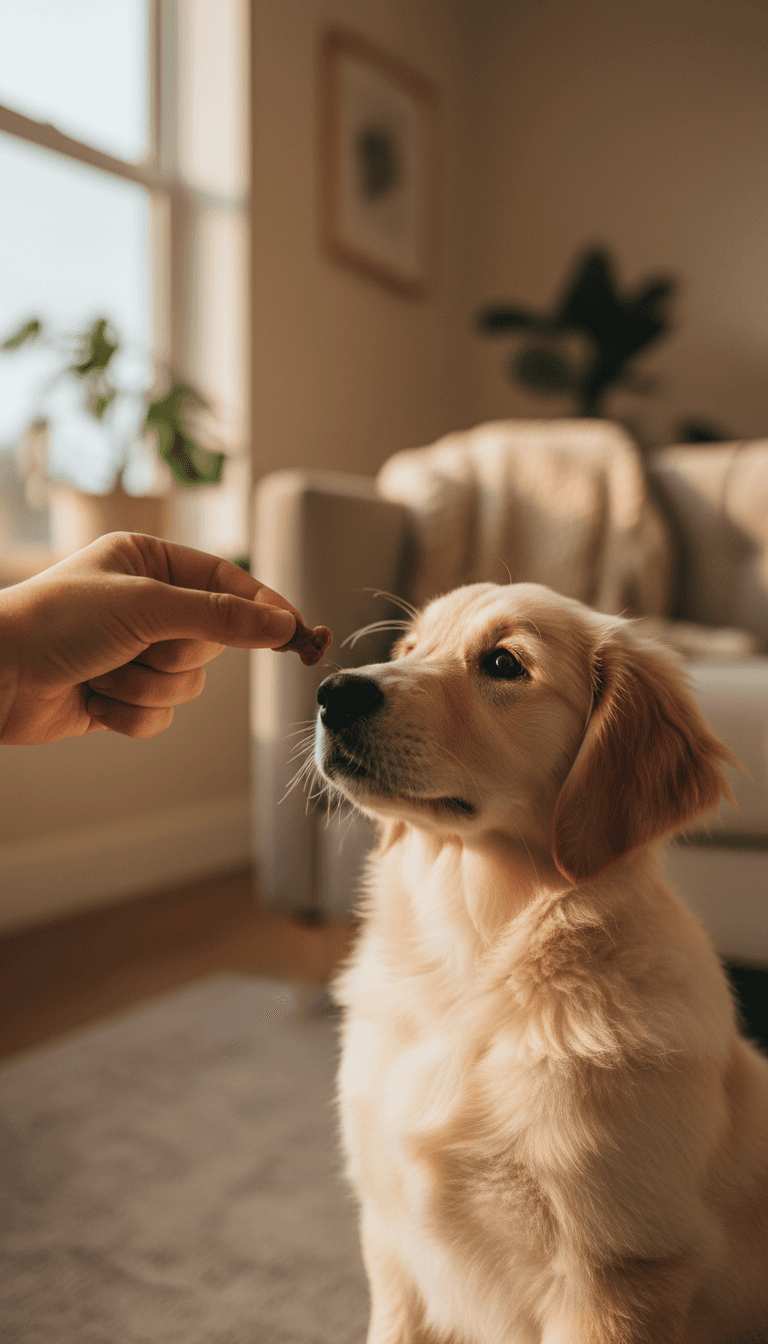
While generic advice often suggests simply ignoring the dog, this only covers half the equation. The critical difference in our online puppy training course is the precision of the reward. You must wait for the exact micro-second all four paws are on the floor. As soon as they touch the ground, immediately mark the behavior with a calm "good" and offer a treat or a low-energy pat. If you wait too long, you miss the window to reinforce the desired behavior. Consistency across all family members ensures the puppy learns that "paws down" is the only key that unlocks your affection.
How to Stop Puppy Jumping and Biting or Nipping
While the "Four Paws" rule is effective for standard greetings, the process becomes more complex when jumping is accompanied by nipping at hands or tugging on clothes. This combination usually indicates that your puppy has become over-stimulated. When their arousal levels peak, they lose the ability to think clearly and resort to using their mouths to engage with you. Pushing them away in this state often feels like a game of wrestling, which only increases the intensity of the biting.
To address this, use a "Time Out" strategy that focuses on removing the reward entirely. If your puppy jumps and nips, do not scold them. Instead, immediately leave the room and close the door for 30 seconds. By creating this physical barrier, you signal that biting and jumping results in the total loss of your presence. This temporary social isolation is a powerful way to communicate that the fun stops the moment teeth touch skin or fabric.
To safely manage an over-excited puppy without using your hands, which often triggers further nipping, we recommend using a house line. This is a lightweight leash with the handle cut off to prevent it from snagging on furniture. A house line allows you to redirect your puppy or step on the lead to prevent the jump without reaching toward their face. Mastering these management techniques is a key component of a comprehensive online puppy training course.
Managing the Front Door: How to Stop Puppy Jumping on Visitors
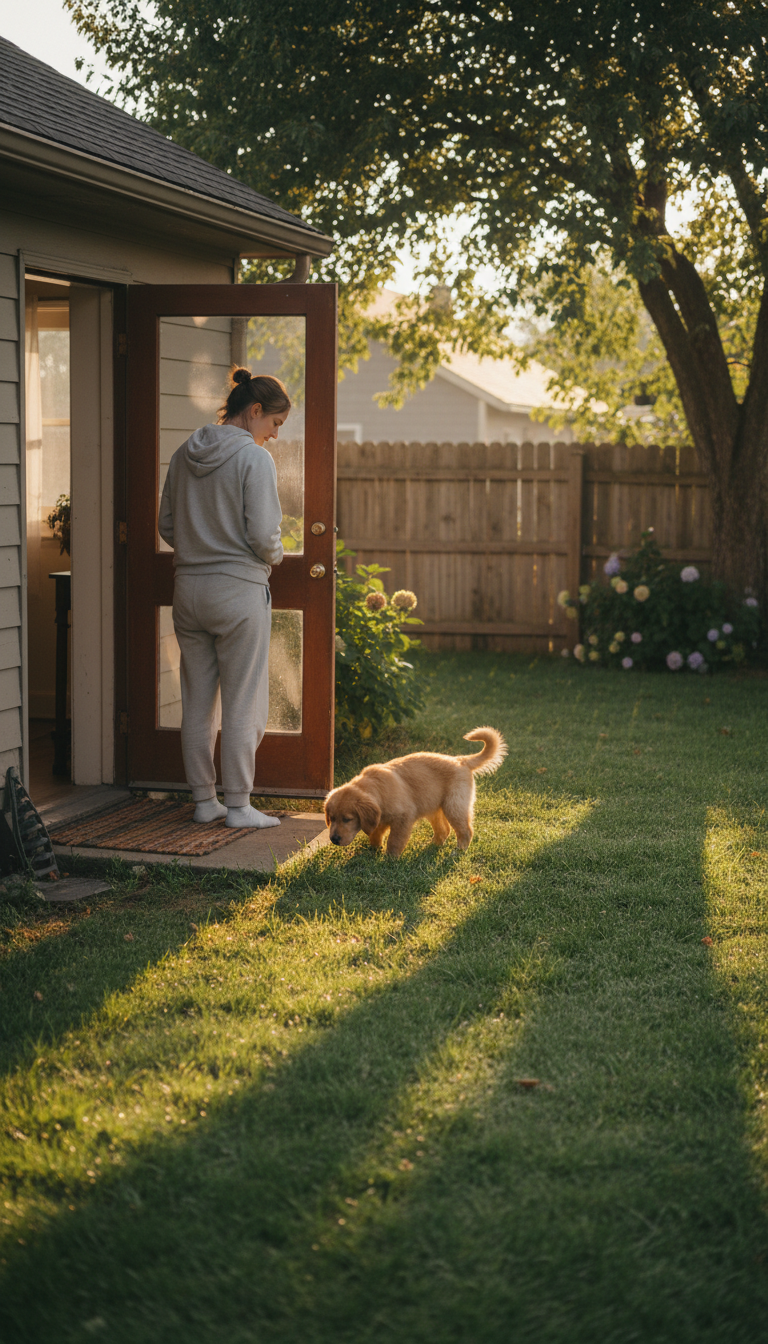
The front door is the most high-stakes environment for any training plan. When a guest arrives, the combination of a new person, the doorbell, and your own redirected attention creates a perfect storm of excitement. To successfully stop puppy jumping up on people in this scenario, you must prioritize management before the guest even enters. Using a baby gate or a crate is essential during the early stages. These barriers prevent the puppy from reaching the visitor, effectively stopping the self-rewarding cycle where the puppy gets to touch or lick the guest by leaping up. If they cannot reach the person, they cannot practice the habit.
Once the guest is inside, give them a specific role to play. Hand your visitor a small container of high-value treats before they interact with the puppy. Instruct them to completely ignore the puppy's initial excitement. As soon as the puppy shows a moment of calmness or keeps four paws on the floor, the guest should drop a treat directly onto the ground. Dropping the treat ensures the puppy's head goes down toward the floor rather than up toward the guest's face.
For long-term success, you should transition this management into a stationing behavior. We recommend teaching your puppy to settle on a mat placed several meters away from the entrance. This gives the puppy a designated job to do while the door is being opened. By combining physical barriers with reward-based stationing, you transform a chaotic greeting into a structured routine. This systematic approach to impulse control is a core pillar of our online puppy training course, ensuring your puppy remains calm regardless of who walks through the door.
Out on the Walk: Stopping Your Puppy Jumping on Strangers
Navigating a busy Australian footpath or a local park adds a layer of unpredictability to your training. Out in public, your puppy is bombarded with novel scents and high speed movement, making it harder for them to maintain focus. To successfully stop puppy jumping up on people during your daily exercise, you must become proactive about managing the environment.
A highly effective tool for this is the 'Look at That' (LAT) game. When your puppy notices a stranger in the distance, mark that moment of acknowledgement with a calm 'yes' and a high value treat before they have the chance to lunge. This teaches them that seeing a person is a cue to look back at you for guidance and a reward. If the footpath is narrow, move onto the nature strip or a driveway to create a buffer zone; distance is the best way to keep arousal levels low enough for the puppy to think.
You must also learn to advocate for your puppy. Well-meaning strangers often rush in to pat a cute puppy, which inadvertently rewards the jump. Do not be afraid to use a clear script: 'We are training right now; please wait until he sits before patting.' This empowers you to control the interaction and ensures the puppy only receives social rewards when they are calm. Mastering these public greetings is a vital part of our online puppy training course, giving you the confidence to handle any social situation.
Training the Sit as an Alternative Greeting
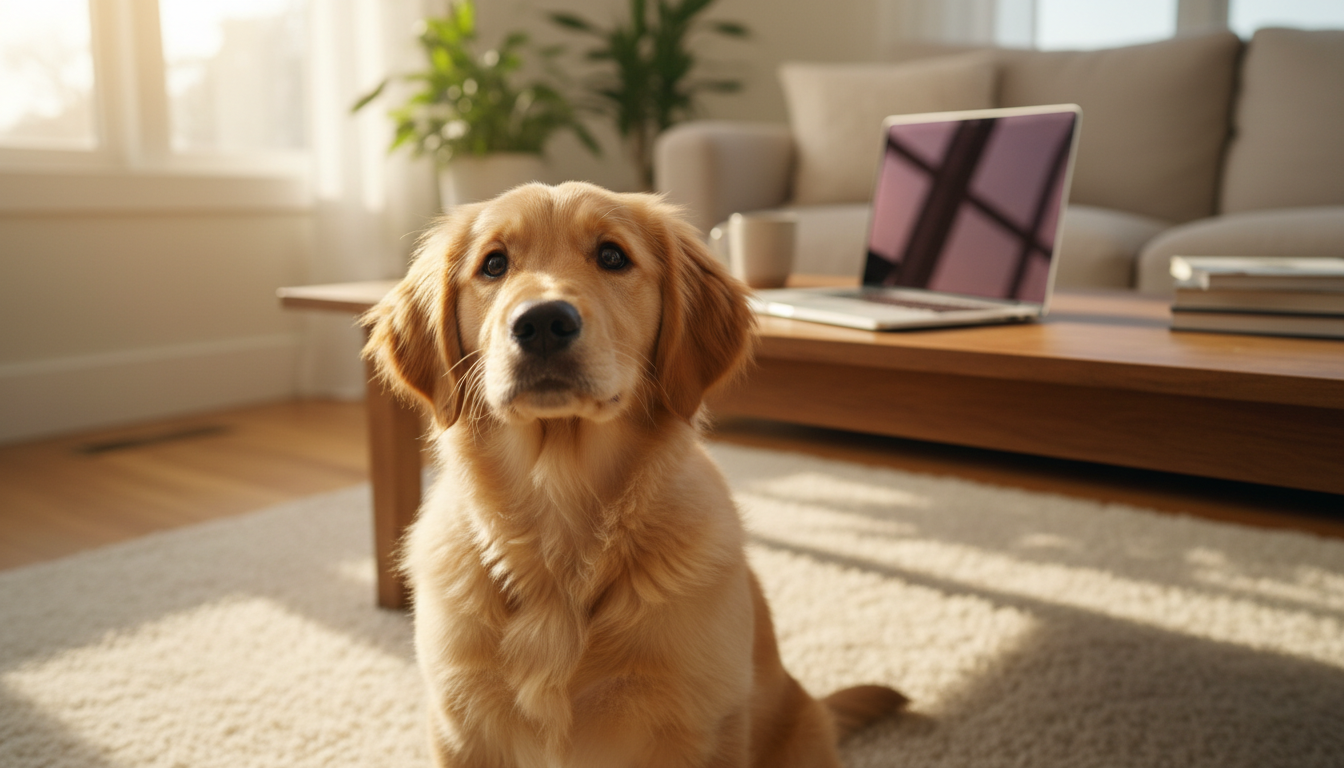
Moving from environmental management to active skill-building allows you to replace an unwanted habit with a constructive one. It is significantly more effective to teach a puppy what TO do rather than focusing solely on what NOT to do. From a biomechanical perspective, a puppy cannot sit and jump at the same time; these are mutually exclusive behaviors. By establishing a default sit, you provide your puppy with a clear, achievable task that naturally prevents them from launching into the air.
The goal is to develop an 'Auto-Sit,' where the puppy learns that sitting is the functional 'key' that unlocks your attention. To practice this, wait for your puppy to approach you. Before they have the chance to leap, capture the moment their bottom hits the floor with a reward. You can find the foundational steps for this in our guide on how to teach your puppy to sit.
To generalize this for greeting scenarios, practice 'controlled approaches' with family members. Have a person walk toward the puppy; if the puppy remains seated, they receive a treat and a pat. If the puppy's front paws lift even slightly, the person must turn and walk away. This clear contrast helps the puppy understand that sitting is the only way to get what they want. Mastering this impulse control is a core component of our online puppy training course, ensuring your puppy chooses calm manners over chaotic greetings every time you stop puppy jumping up on people.
Common Mistakes to Avoid During Training
Effective training requires moving away from outdated, old school methods that rely on physical discomfort or intimidation. Many generic guides still suggest kneeing a puppy in the chest, stepping on their back paws, or using loud, sharp yells to stop the behavior. These tactics are not only inhumane; they are fundamentally flawed. Inflicting pain or fear can lead to defensive jumping, where the puppy leaps up out of anxiety to monitor your hands or face, or it may damage the bond of trust entirely.
Consistency is the other major hurdle. If one family member allows the puppy to jump because they are wearing old work gear, while another scolds the puppy for jumping on their office clothes, the puppy will become confused. Dogs do not understand the value of different fabrics. They only see that jumping is sometimes rewarded and sometimes punished, which creates a gambler’s mentality and ensures the behavior persists. For a clear, reliable path to success, our online puppy training course provides the structure needed to keep every human in the household on the same page while you stop puppy jumping up on people.
Training for Success with Online Puppy School
Ultimately, persistent jumping is a symptom of a broader lack of impulse control. While the techniques shared here provide immediate relief, long term success depends on teaching your puppy how to regulate their excitement in all areas of life.
Our online puppy training course provides a structured, step-by-step curriculum designed to build foundational calmness from the ground up. By following a professional sequence of lessons, you replace chaotic reactions with predictable manners. We invite you to explore the full program to transform your puppy’s behavior and enjoy the stress free companionship you envisioned when you first brought them home.